
Log Bunk Beds: A Complete Guide to Sizes, Construction & Room Planning
Posted by Posted by Just Bunk Beds on May 28th 2024
Revised October 1st 2026
Log bunk beds combine space-saving sleeping capacity with the substantial look and construction of traditional log furniture. While they are a natural fit for cabins and mountain homes, today's log bunk beds are also used in vacation rentals, lodges, guest rooms and homes where buyers want a sturdy bunk bed with a distinctive solid-wood appearance.
Choosing the right log bunk bed involves more than selecting a finish or deciding which style looks best in the room. Bed size, ceiling height, mattress thickness, ladder placement, under-bed clearance and delivery access can all affect which configuration works best.
In this guide, we'll explain the most important things to consider when choosing a log bunk bed, including sizes and configurations, construction, room and ceiling requirements, mattresses, ladders, trundles and delivery planning.
What Is a Log Bunk Bed?
A log bunk bed is a bunk bed constructed to showcase the natural character and substantial appearance of log-style wood furniture. Rather than using narrow boards or thin decorative panels, log bunk beds typically feature thick posts, solid wood rails and exposed wood grain, giving the bed a heavier, more rustic appearance.
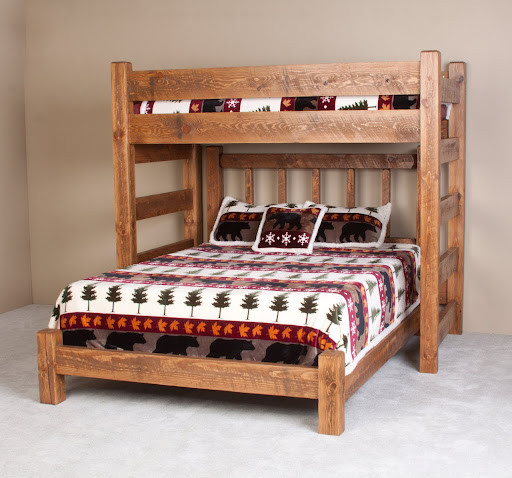
The term “log bunk bed” describes the construction and style of the bed, not a particular mattress size or configuration. Log bunk beds are available in several layouts, including Twin over Twin, Twin XL over Twin XL, Twin over Full, Twin XL over Queen and Queen over Queen, as well as loft-style designs.
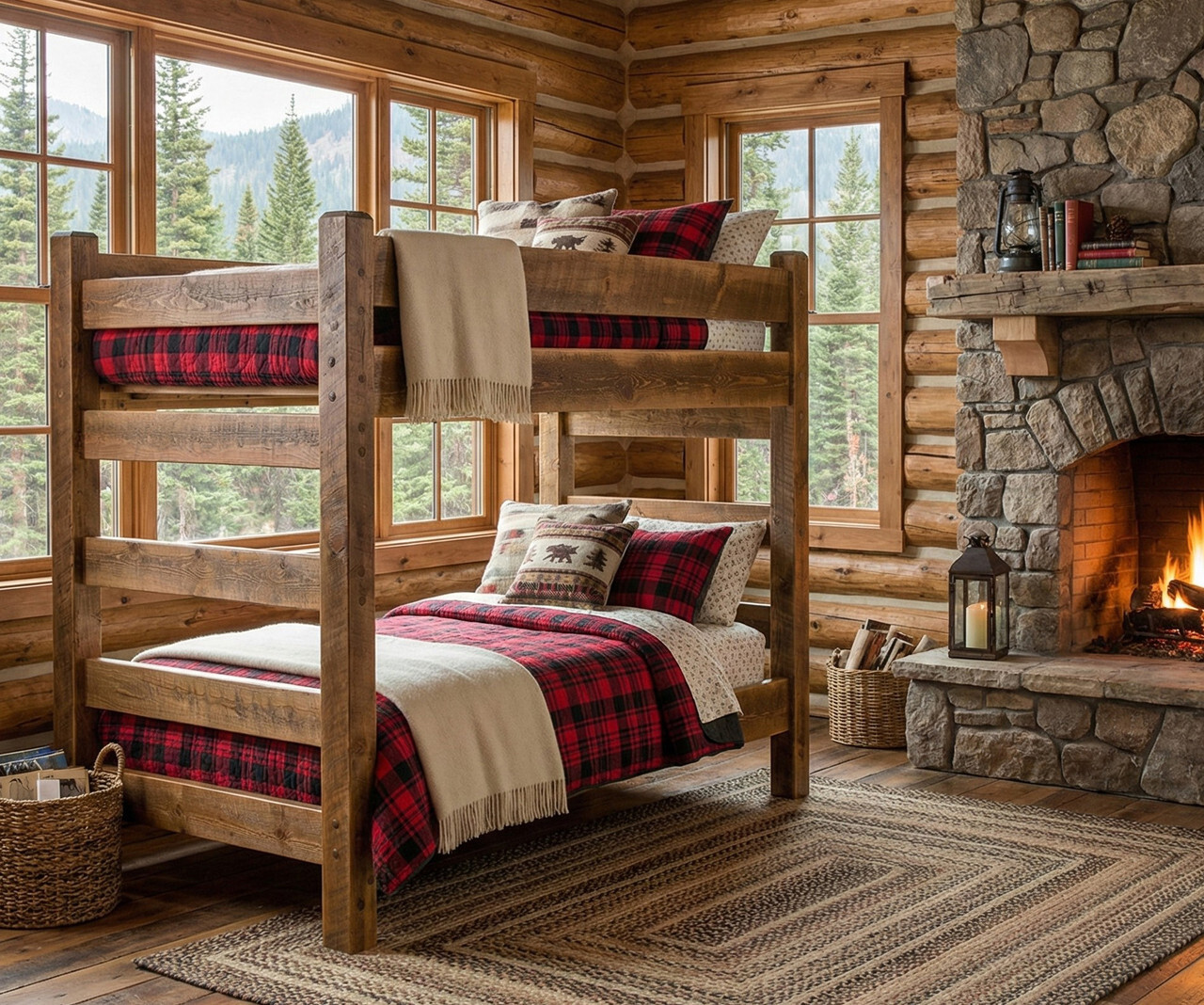
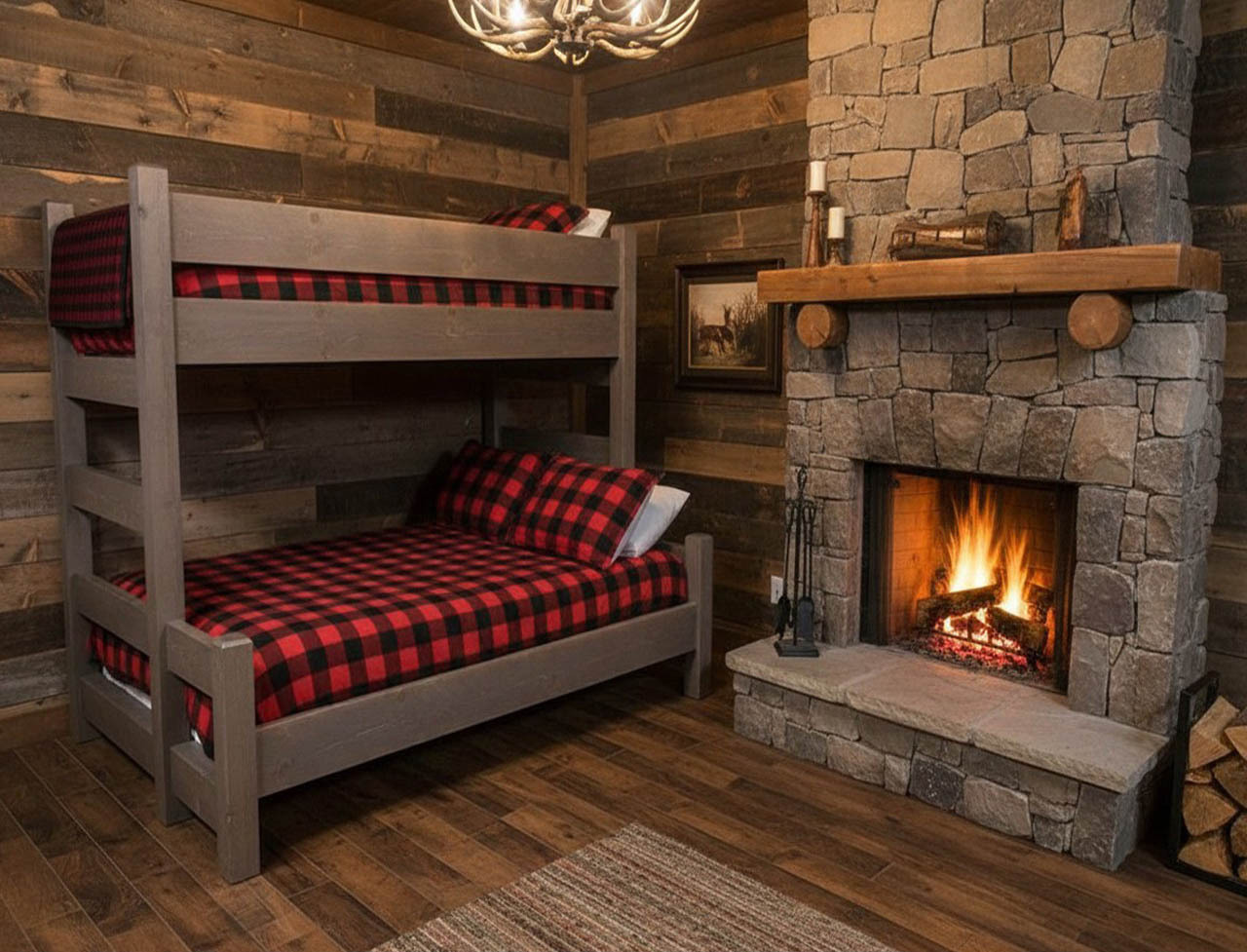
Although log bunk beds are closely associated with cabins and rustic interiors, the style can work in many settings. Different wood finishes, bedding, flooring and wall colors can make the same bed feel traditional and rustic or considerably more contemporary.
How Are Log Bunk Beds Constructed?
Log-style bunk beds can look similar at first glance, but their construction can be quite different. Two styles you'll commonly encounter are Barnwood-style beds made with squared timbers and traditional log bunk beds made with round posts and rails.
Barnwood-Style Bunk Beds
Despite the name, Barnwood-style bunk beds are not necessarily made from reclaimed barnwood. The Barnwood beds in our collection are constructed from Norway pine, which is milled into substantial components including 4" x 4" posts and 2" x 6" rails.
The squared timbers provide the heavy, rustic appearance associated with barnwood furniture while creating a consistent structure for bunk bed construction.
Traditional Round-Log Bunk Beds
Traditional log bunk beds have a noticeably different appearance. The log beds in our collection are made from spruce and feature approximately 3"-diameter round wood components.
The rounded posts and rails create the classic log-furniture appearance many people associate with cabins, lodges and mountain homes.
Log Bunk Bed Sizes and Sleeping Configurations
One of the advantages of log bunk beds is that they are available in more than the traditional Twin-over-Twin configuration. Choosing the right size depends on who will use the bed, available room dimensions and how much sleeping space is needed on each level.
Common configurations include:
- Twin over Twin – A space-efficient choice for children, guest rooms and smaller sleeping areas.
- Twin XL over Twin XL – Adds approximately five inches of mattress length, making it better suited for taller teenagers and adults.
- Twin over Full – Provides a larger lower sleeping surface while keeping the upper bunk compact.
- Twin XL over Queen – Combines an extra-long upper bunk with a Queen-size lower bed, providing considerably more sleeping space without requiring two Queen beds.
- Full XL over Queen – Offers additional width on the upper bunk while maintaining a Queen-size lower sleeping surface.
- Queen over Queen – Provides full Queen-size sleeping surfaces on both levels and is particularly useful when maximizing adult sleeping capacity is a priority.
Log construction tends to give these beds substantial proportions, so mattress size alone should never be used to determine whether a bunk bed will fit a room. Overall bed length and width, ladder placement, ceiling height and space needed to move around the bed should all be considered.
Larger configurations also require additional planning for delivery. A Queen-size mattress may fit through a doorway easily, while the assembled headboards or partially assembled components of a large solid-wood bunk bed can require considerably more clearance.
Room Planning and Ceiling Height for Log Bunk Beds
Because log bunk beds use substantial posts, rails and headboards, it is important to consider the overall dimensions of the bed, not just the mattress sizes, when planning the room.
Start by measuring the available floor space and comparing it with the bunk bed's complete length, width and height. Remember to account for baseboards, door swings, closets and other furniture that may affect where the bed can be positioned.
Ceiling Height and Upper-Bunk Headroom
Ceiling height is especially important with taller bunk beds. The measurement that matters most is the space between the top of the upper mattress and the ceiling, since this determines how comfortably someone can sit up and move around on the upper bunk.
Mattress thickness also affects this clearance. A thicker upper mattress raises the sleeping surface and reduces the amount of usable headroom above it. Always follow the bunk bed manufacturer's maximum recommended mattress thickness for the upper bunk.
Allow Space for the Ladder and Trundle
The way you access the upper bunk can vary depending on the style and construction of the bed.
Barnwood-style bunk beds generally provide two ways to reach the upper bunk. The horizontal boards in the headboard can be used as steps, or an optional custom-made slanted ladder can be added. The ladder hooks onto the upper and lower side rails and does not rest on the floor.
Traditional round-log bunk beds are often designed differently, with built-in rungs incorporated into the end of the bed for access to the upper bunk. Because the climbing system is part of the bed itself, it does not require the additional floor space of a slanted ladder.
If a Barnwood-style bunk bed is ordered with the optional slanted ladder, allow sufficient open space beside the bed for comfortable access. If the bed includes an under-bed trundle, also make sure there is enough clear floor area to pull the trundle completely out.
For rooms where space is limited, consider the bed, ladder and trundle as one complete footprint rather than evaluating the dimensions of the bunk bed alone.
Choosing a Mattress for a Log Bunk Bed
Mattress thickness is an important consideration when choosing any bunk bed, particularly for the upper sleeping surface. The mattress needs to provide comfortable support while maintaining sufficient guardrail height above the mattress.
Both traditional log bunk beds and Barnwood-style bunk beds typically accommodate mattresses approximately 8 to 10 inches thick. This provides enough depth for a comfortable mattress while remaining appropriate for the design of the upper bunk.
When selecting a mattress, consider the sleeper as well as the bed. Children may be comfortable on a thinner mattress, while teenagers and adults may benefit from the additional support available in an 8- to 10-inch mattress.
Always confirm the mattress dimensions and thickness recommended for the specific bunk bed being purchased, especially for the upper bunk. A mattress that is too thick can reduce the effective height of the guardrails.
What About the Bottom Mattress?
The lower bunk generally offers more flexibility because guardrail height is not a concern. However, mattress thickness still affects the amount of sitting and sleeping headroom between the lower and upper bunks.
A thicker mattress raises the sleeper closer to the upper bunk, so buyers should consider comfort and usable headroom together when choosing the lower mattress.
Adding a Trundle to a Log Bunk Bed
A trundle can add another sleeping surface without increasing the permanent footprint of the bunk bed. When not in use, the trundle rolls underneath the lower bunk and can be pulled out when an additional bed is needed.
Depending on the size and configuration of the log or Barnwood-style bunk bed, available trundle sizes can include Twin, Twin XL, Full, Full XL and even Queen. Larger bunk beds provide more room beneath the lower bunk and can accommodate some of the larger trundle options.
Consider the Ladder Before Choosing a Trundle
Upper-bunk access is especially important when a trundle is added.
On Barnwood-style bunk beds, the headboard can be used to access the upper bunk without placing a ladder in front of the under-bed area. If the optional slanted ladder is selected, its position should be considered when determining how easily the trundle can be pulled out and accessed.
Traditional round-log bunk beds with built-in climbing rungs at the end of the bed generally keep the front of the lower bunk unobstructed, which can make trundle access more straightforward.
Plan for the Trundle When It Is Open
A trundle may disappear almost completely beneath the bunk bed when stored, but it requires considerably more floor space when pulled out.
Before ordering, measure the open area alongside the bunk bed and make sure there is enough room to extend the trundle fully without interfering with walls, dressers, doors or other furniture.
For occasional guests, vacation homes and rooms where maximizing sleeping capacity is important, a trundle can allow one bunk bed to provide three separate sleeping surfaces while using very little additional space when the third bed is not needed.
If you are considering this option, our guide to choosing a bunk bed with a trundle explains trundle sizes, mattress requirements, floor clearance, ladder placement and other room-planning considerations in greater detail.
Log Bunk Bed Finishes and Room Styles
Log bunk beds are naturally associated with cabins, lodges and mountain homes, but the surrounding finishes and furnishings can dramatically change how the bed looks in a room.
Wood finishes range from lighter natural tones such as Honey Pine to darker stains and weathered finishes. A lighter finish can emphasize the natural grain and character of the wood, while darker or weathered finishes can create a more traditional or substantial appearance.
Log Bunk Beds Aren't Just for Cabins
The same log or Barnwood-style bunk bed can look very different depending on the bedding, wall colors, flooring and furniture around it.
Pairing a rustic bed with plaid bedding, warm wood walls and traditional furnishings creates the familiar cabin look. In contrast, neutral bedding, lighter walls and contemporary flooring can give the same bed a cleaner, more modern appearance while preserving the character of the natural wood.
This makes log bunk beds suitable not only for cabins and lodges, but also for vacation rentals, guest rooms and everyday homes where a substantial solid-wood bunk bed is preferred.
Expect Natural Variation in the Wood
Because these beds are made from real wood, variations in grain, knots and coloration are part of their appearance. Individual components may not look identical, and the finished bed can have natural variations that would not be present in furniture made from engineered materials.
Delivery and Doorway Planning for Large Log Bunk Beds
The size and weight of solid-wood bunk bed components should be considered before the bed arrives, particularly with Queen and other larger configurations.
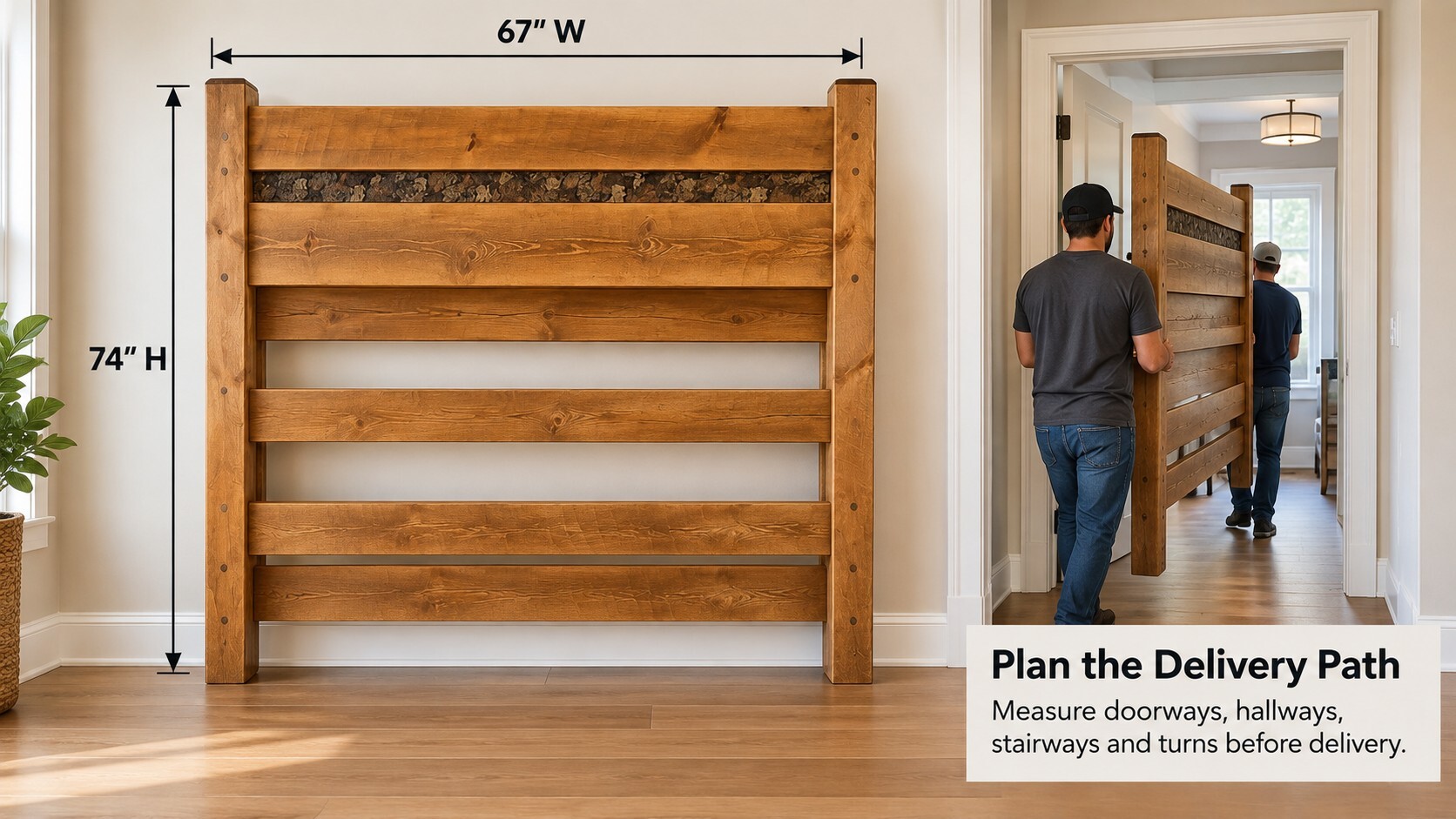
Some log and Barnwood-style bunk beds are shipped with the headboards and footboards fully assembled. This simplifies part of the assembly process, but it also means these large pieces must be moved through the home's entrances, hallways, stairways and into the room where the bunk bed will be assembled.
Measure More Than the Doorway
Door width is only one part of delivery planning. A large headboard may fit through an open doorway but still be difficult to maneuver around a tight hallway, staircase landing or sharp turn.
For example, the fully assembled headboards on some Queen-size Barnwood bunk beds measure approximately 74 inches high by 67 inches wide. Before ordering a large bunk bed, consider the entire path from the delivery point to the bedroom, including:
- Exterior and interior doorways
- Hallway widths and turns
- Stairways and landings
- Low ceilings or overhead obstructions
- The final doorway into the room
It is also important to remember that freight delivery and bringing the furniture into the home are not necessarily the same service. Buyers should understand the delivery method offered by the retailer and make arrangements for moving large cartons or components inside when necessary.
Plan the Room Before Assembly
Once the components are in the room, position them close to where the completed bunk bed will stand before beginning assembly. A large solid-wood bunk bed can be considerably more difficult to reposition after it has been fully assembled.
Taking a few measurements before ordering can prevent a situation where the bunk bed fits comfortably in the bedroom but one of its largest components cannot make the journey to the room.
Are Log Bunk Beds Suitable for Adults?
Log bunk beds are often associated with children's rooms, but many solid-wood models are designed in sizes and configurations that can also accommodate teenagers and adults.
For adult use, mattress size is only one consideration. Buyers should also look at the bed's stated weight capacity, overall construction, upper-bunk access, mattress thickness and available headroom.
Choosing a Size for Adult Sleepers
A standard Twin bunk may work well for children and occasional guests, while Twin XL provides approximately five additional inches of mattress length, making it a practical option for taller teenagers and adults.
Larger configurations provide additional sleeping space. A Twin XL over Queen can provide an adult-size lower sleeping surface while keeping the upper bunk relatively compact, while Full XL over Queen and Queen over Queen configurations provide considerably more room for adult sleepers.
These larger configurations can be particularly useful in vacation homes, rental properties, lodges and guest rooms, where the goal may be to accommodate several adults comfortably within one sleeping area.
Check the Weight Capacity of the Specific Bed
The substantial appearance of a log bunk bed should not be used by itself to determine how much weight the bed can support. Weight capacities vary by model and manufacturer, so always check the specifications for the particular bunk bed being considered.
This is especially important when the upper bunk will regularly be used by an adult or when more than one person may use a larger lower bunk.
Log Bunk Beds vs. Conventional Wood Bunk Beds
Both log bunk beds and conventional wood bunk beds can provide durable, space-saving sleeping arrangements, but there are some practical differences to consider.
The most obvious difference is construction and appearance. Traditional log bunk beds use substantial round wood components, while Barnwood-style beds use heavier squared timbers. Conventional wood bunk beds are generally built with smaller posts, rails and panels, giving them a less massive overall appearance.
Log and Barnwood-style bunk beds also tend to have a larger visual presence in the room. This can be desirable in larger bedrooms, vacation homes and lodges, but it makes accurate room measurements especially important.
Another difference is the size of individual components. Fully assembled headboards and substantial solid-wood rails may require more planning when moving the bed through doorways, hallways and stairways.
The choice ultimately comes down to the look, available space, sleeping configuration and construction style you prefer. Buyers looking for a more traditional furniture profile may prefer a conventional wood bunk bed, while log and Barnwood-style designs provide the heavier proportions and natural wood character associated with rustic furniture.
What to Consider Before Buying a Log Bunk Bed
Before choosing a log bunk bed, look beyond the style and finish and consider how the bed will function in the room.
Check the overall dimensions, not just the mattress sizes, and measure the available floor and ceiling space. Consider who will use the upper and lower bunks, whether Twin, Twin XL, Full, Full XL or Queen sleeping surfaces are appropriate, and verify the weight capacity of the specific model.
Think about how the upper bunk will be accessed. Barnwood-style beds may use the headboard for climbing or an optional hooked ladder, while traditional round-log designs may incorporate climbing rungs into the end of the bed.
If you are adding a trundle, make sure there is sufficient floor space to pull it completely out. Also consider whether a ladder or other furniture could interfere with its operation.
Finally, plan the delivery path before ordering a larger solid-wood bunk bed. Measure doorways, hallways, stairways and turns, not simply the bedroom itself, especially when the bed includes fully assembled headboards or other large components.
Taking these measurements in advance makes it much easier to choose a bunk bed that fits both the sleepers and the space.
Frequently Asked Questions
What are log bunk beds made from?
Traditional round-log bunk beds can be made from solid spruce wood, using round posts and rails to create their characteristic log-furniture appearance. Barnwood-style bunk beds may use a different construction method. The Barnwood-style beds discussed in this guide are made from solid Norway pine that is milled into substantial squared components rather than reclaimed barnwood.
Are Barnwood bunk beds made from reclaimed barnwood?
Not necessarily. The Barnwood-style bunk beds featured in our collection are made from solid Norway pine, not reclaimed barnwood. The wood is manufactured and finished to provide the rustic appearance associated with traditional barnwood furniture.
What mattress thickness works with a log bunk bed?
Both traditional log bunk beds and Barnwood-style bunk beds typically accommodate mattresses approximately 8 to 10 inches thick. Always check the specifications for the individual model, particularly for the upper bunk, where mattress thickness affects the effective height of the guardrails.
Can adults sleep on log bunk beds?
Many log bunk beds are available in sizes suitable for teenagers and adults, including Twin XL, Full XL and Queen configurations. However, suitability for adult use also depends on the weight capacity and construction of the specific model, so those specifications should always be checked before purchasing.
Can a log bunk bed have a trundle?
Yes. Depending on the bunk bed's size and design, trundle options may include Twin, Twin XL, Full, Full XL or Queen. Make sure there is sufficient open floor space beside the bunk bed to pull the trundle completely out, and consider whether the ladder could interfere with access.
Do log bunk beds require more room than regular bunk beds?
Not necessarily, but their substantial posts, rails and headboards can make their overall dimensions larger than the mattress sizes alone suggest. Measure the complete bunk bed dimensions and account for ladder clearance, trundle extension, ceiling height and walking space before ordering.