

How to Anchor a Bunk Bed to a Wall - JustBunkBeds
Posted by Posted by Just Bunk Beds on Apr 6th 2025
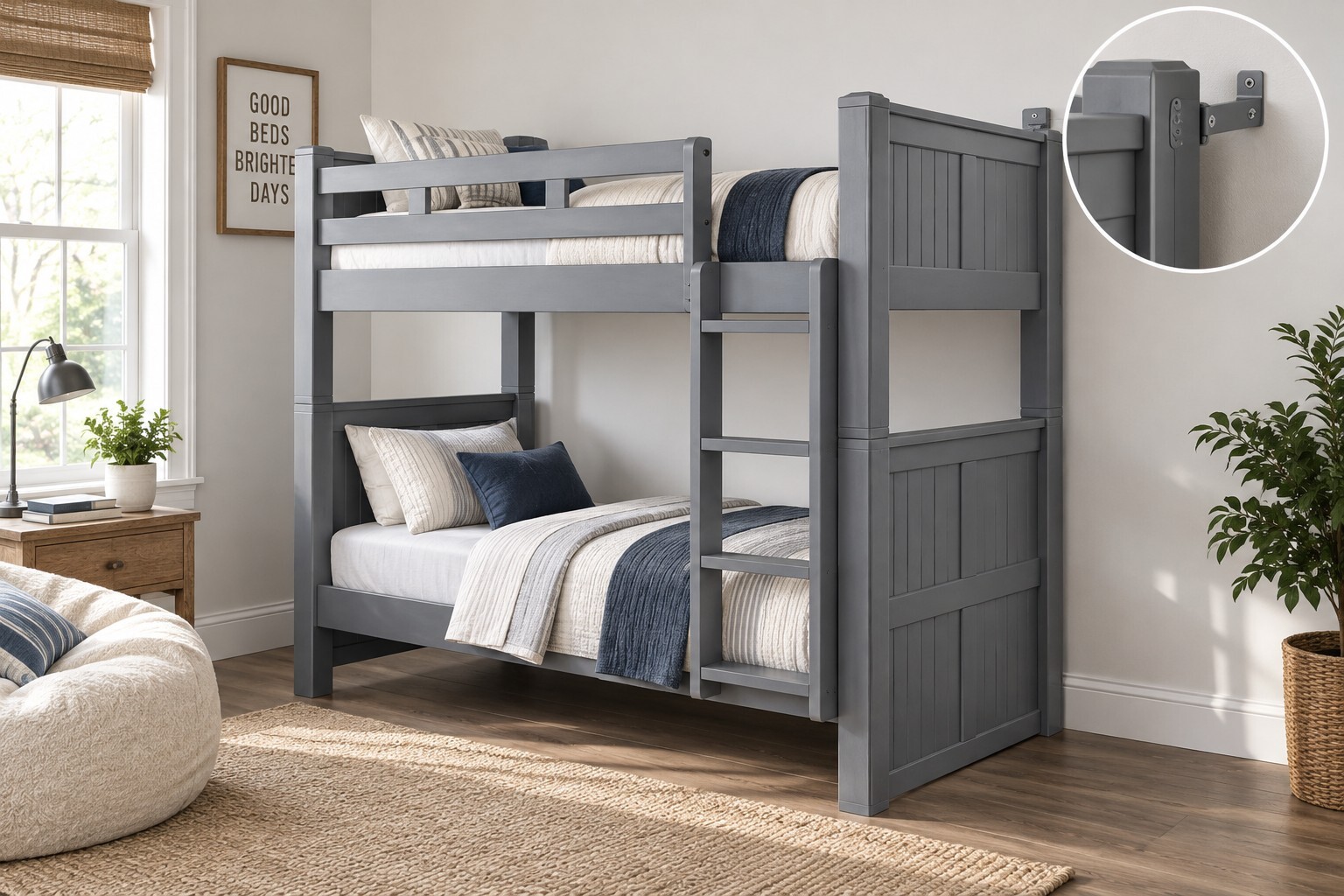
A properly assembled bunk bed should feel stable and secure when used according to the manufacturer’s instructions. In some situations, however, homeowners may want to add another level of stability by securing the bunk bed to a wall.
Wall anchoring is an additional safety measure, not a substitute for proper assembly. Before attaching a bunk bed or loft bed to a wall, make sure the bed is fully assembled, all hardware is properly tightened, the guardrails and ladder are correctly installed, and there are no damaged or missing components.
Anchoring may be worth considering if the bed experiences noticeable movement during normal use, is installed in an area where additional stability is desired, or is located in a region where earthquakes or other events could cause furniture to shift.
The correct anchoring method depends on several factors, including the construction of the bunk bed, the type of wall behind it, and the manufacturer’s recommendations. There is no single wall anchor or mounting method that is appropriate for every bunk bed.
In this guide, we’ll explain how to secure a bunk bed to a wall, what to check before anchoring, how wall construction affects the installation, and what you should know before anchoring a loft bed.
Do You Need to Anchor a Bunk Bed to the Wall?
Not every bunk bed needs to be anchored to a wall. Many bunk beds are designed to be freestanding and, when properly assembled and used according to the manufacturer’s instructions, should remain stable during normal use.
Before considering wall anchoring, check the manufacturer’s assembly instructions. If the manufacturer requires or recommends securing the bunk bed to a wall, follow those instructions and use the specified attachment points and appropriate hardware.
Even when wall anchoring is not required, some homeowners may choose to add it as an extra measure of stability. This may be particularly useful when:
- The bunk bed experiences some movement during normal use.
- The bed will be used regularly by older children, teenagers, or adults.
- The bunk bed or loft bed is relatively tall.
- Additional stability is desired because of the room layout or flooring.
- The home is located in an earthquake-prone area.
- The manufacturer specifically recommends wall anchoring.
However, excessive movement should not automatically be treated as a wall-anchoring problem. A bunk bed that feels unusually loose or unstable should first be inspected for loose bolts, improperly installed bed rails, slats, guardrails, ladder connections, damaged components, or other assembly issues.
Anchoring should add stability to a properly assembled bunk bed,it should never be used to compensate for an improperly assembled or structurally damaged bed.
If you are unsure whether your particular bunk bed should be anchored, consult the manufacturer’s instructions before modifying or attaching anything to the bed frame.
Before Anchoring a Bunk Bed: Check the Bed First
If a bunk bed feels loose or moves more than expected, do not assume that attaching it to the wall is the solution. Start by inspecting the bed itself.
Bunk beds contain multiple connection points, and even a well-built bed can develop some movement if hardware loosens over time or a component was not installed correctly during assembly.
Before anchoring the bed, check the following:
Bolts and hardware: Make sure all bolts, screws, and other fasteners are present and properly tightened. Recheck them periodically, especially after the bed has been used for a while.
Bed rails: Confirm that the side rails are fully seated and securely attached to the headboards or end panels according to the manufacturer’s instructions.
Slats and support system: Make sure all mattress-support slats, center supports, and related hardware are installed correctly and securely fastened where required.
Guardrails: Check that the upper-bunk guardrails are correctly installed and firmly attached. Never remove or modify a required guardrail simply to create an anchoring point.
Ladder or stairs: Verify that the ladder or staircase is properly installed and that all attachment points are secure.
Floor contact: Make sure all bed posts are resting firmly on the floor. Uneven flooring or an unstable surface can contribute to movement.
Damaged components: Inspect the frame for cracked wood, bent metal, damaged hardware, loose joints, or other structural problems.
After checking the bed, gently test it again for movement. If the source of the movement was loose or incorrectly installed hardware, correcting the assembly may significantly improve stability without any additional wall attachment.
If the bed remains unusually unstable after it has been properly assembled and inspected, contact the manufacturer or retailer before attempting to correct a structural problem by anchoring it to the wall.
A wall anchor can provide additional stability, but the bunk bed itself must be structurally sound first.
How to Secure a Bunk Bed to a Wall
Before anchoring any bunk bed or loft bed, complete the manufacturer’s assembly instructions and confirm that the bed is properly assembled and structurally sound.
Wall anchoring should always be considered an additional step, not a correction for improper assembly.
The exact method used to secure a bunk bed to a wall will depend on the design of the bed, the construction of the wall, and the manufacturer’s recommendations. Whenever possible, follow the anchoring instructions or attachment points provided by the bunk bed manufacturer.
Determine Where the Bunk Bed Will Be Positioned
Place the bunk bed in its intended location before deciding where it will be anchored. The bed should sit level and firmly on the floor without relying on the wall to hold it upright or compensate for an uneven surface.
Also make sure the placement of the bed does not interfere with windows, doors, ceiling fans, light fixtures, or other potential hazards.
Identify a Suitable Structural Attachment Point in the Wall
The wall surface itself is not necessarily a structural attachment point. For a typical wood-framed wall, this usually means locating a wall stud behind the drywall.
Brick, concrete, masonry, and metal-framed walls require different attachment methods. The appropriate fastener depends on the wall construction and the load it is expected to support.
Do not assume that a general-purpose drywall anchor is appropriate simply because it can be installed in drywall.
Identify an Appropriate Attachment Point on the Bunk Bed
The wall connection should be made to a structural part of the bunk bed frame rather than to a decorative or non-load-bearing component.
Suitable attachment locations vary considerably between bunk bed designs. Do not drill into, modify, or attach hardware to the bed unless the manufacturer permits it or you are certain the attachment will not weaken the frame.
Never use a guardrail, mattress slat, ladder rung, decorative panel, or other component that was not designed to carry structural loads as an anchoring point.
Select Hardware Appropriate for Both the Bed and the Wall
There is no universal bunk bed wall-anchoring kit that is appropriate for every installation. The correct brackets, straps, screws, anchors, or other hardware will depend on the bunk bed construction and the type of wall. Manufacturer-supplied anchoring hardware should be used when provided.
If the manufacturer does not specify an anchoring method, consult a qualified installer or knowledgeable hardware professional who can evaluate the particular bed and wall construction before selecting the hardware.
Secure the Bed Without Pulling It Out of Position
The purpose of anchoring is to provide additional stability, not to pull the bunk bed against the wall so forcefully that the frame becomes twisted, lifted, or placed under unnecessary stress.
Keep all bed posts firmly supported by the floor and make sure the bed remains level while the anchoring hardware is installed.
Inspect the Installation
Once the bunk bed has been secured, inspect both the bed and the wall attachment.
Make sure the anchoring hardware is secure, the bed remains level, all four posts maintain proper floor contact, and no part of the bunk bed has been damaged or distorted during installation.
Periodically inspect the wall connection along with the bunk bed’s regular hardware and other structural components.
The goal is simple: start with a properly assembled, structurally sound bunk bed and use wall anchoring only to provide an additional level of stability.
How to Anchor a Loft Bed to a Wall
Loft beds follow many of the same wall-anchoring principles as bunk beds, but their design deserves some additional consideration. Because the sleeping surface is elevated with open space underneath, movement at the top of a loft bed can sometimes feel more noticeable than movement in a conventional bed.
As with a bunk bed, a loft bed should be completely and correctly assembled according to the manufacturer’s instructions before wall anchoring is considered. Check all bolts, bed rails, slats, guardrails, ladder connections, support components, and floor contact first.
If additional stability is desired, the anchoring method should be appropriate for both the construction of the loft bed and the wall behind it. Whenever possible, use manufacturer-designated attachment points and anchoring hardware.
For a typical wood-framed wall, a secure attachment generally requires connecting to a structural wall stud rather than relying solely on the drywall. Other wall types, including concrete, brick, masonry, and metal-framed walls, may require different fastening methods.
The attachment to the loft bed should also be made at an appropriate structural location on the frame. Avoid using guardrails, ladder rungs, mattress slats, decorative panels, or other components that were not designed as structural anchoring points.
Pay Attention to Ladder Movement
Because climbing onto a loft bed places additional movement on the elevated frame, make sure the ladder or staircase is correctly installed and securely attached before assuming that wall anchoring is needed.
If movement seems to occur primarily when someone climbs the ladder, inspect the ladder connections and the surrounding frame hardware first.
Wall Anchoring Does Not Increase the Bed’s Weight Capacity
Securing a loft bed to a wall may provide additional stability, but it does not increase the manufacturer’s stated weight capacity.
The bed’s weight capacity is determined by its construction, support system, materials, and manufacturer specifications. Wall anchoring should never be used as a reason to exceed those limits.
As with a bunk bed, wall anchoring should supplement a properly assembled loft bed, not compensate for loose hardware, incorrect assembly, damaged components, or inadequate construction.
Anchoring to Different Types of Walls
Before securing a bunk bed or loft bed to a wall, determine what the wall is made of. Drywall, wood framing, concrete, brick, masonry, and metal framing require different fastening methods, and hardware suitable for one type of wall may not be appropriate for another.
The goal is to connect the anchoring system to a suitable structural part of the wall, not simply to the visible wall surface.
Drywall with Wood Studs
In many homes, drywall is attached to wood studs that form the structural framework of the wall.
When anchoring a bunk bed to this type of wall, the structural connection will generally need to be made into a wall stud rather than relying on the drywall itself. A stud finder can help locate the framing behind the wall, but the location should be confirmed before installing anchoring hardware.
Drywall alone should not be assumed to provide an appropriate structural attachment point for a bunk bed or loft bed.
Brick, Concrete, and Masonry Walls
Brick, concrete, and other masonry walls require fastening systems designed specifically for those materials.
The appropriate hardware and installation method can vary depending on whether the wall is solid concrete, concrete block, brick, or another type of masonry. The condition and construction of the wall also matter.
If you are uncertain about the wall material or the appropriate fastening method, consult a qualified installer rather than experimenting with general-purpose anchors.
Metal-Framed Walls
Some homes and buildings use metal studs instead of wood framing. Fastening into metal framing requires different hardware and techniques than fastening into wood studs.
Do not assume that hardware intended for a wood stud can simply be used with a metal-framed wall. If the wall construction is uncertain, have it identified before attempting to anchor the bed.
What About Drywall Anchors?
Drywall anchors are available in many designs and weight ratings, but a printed weight rating alone does not determine whether a particular anchor is suitable for securing a bunk bed.
The forces created by movement of an elevated bed can differ from the static load used to describe the capacity of some wall anchors. For that reason, do not select an anchor solely because its package lists a high weight capacity.
Whenever the bunk bed manufacturer provides wall-anchoring instructions or hardware, follow those recommendations. If no guidance is provided and you are uncertain about the appropriate connection, consult a qualified installer.
The strength of a wall anchor depends on the entire connection, the wall construction, fastener, mounting hardware, installation, and attachment point on the bed all matter.
Does Wall Anchoring Fix a Wobbly Bunk Bed?
Wall anchoring can reduce some movement and provide additional stability, but it should not be considered a repair for a bunk bed that is unusually loose or unstable.
If a bunk bed wobbles excessively, first determine why.
Recheck the assembly instructions and inspect the bed for loose hardware, improperly seated bed rails, unsecured support components, loose ladder connections, incorrectly installed guardrails, uneven floor contact, or damaged parts. Hardware can also loosen gradually through normal use and may need to be periodically inspected and retightened according to the manufacturer’s recommendations.
A small amount of movement does not necessarily mean that a bunk bed is unsafe. Tall furniture can have some noticeable movement during climbing or normal use. However, sudden, excessive, or increasing movement deserves attention.
If the bed continues to feel unusually unstable after it has been correctly assembled, inspected, and all appropriate hardware has been tightened, stop using the bed and contact the manufacturer or retailer for guidance.
Do not use wall anchoring to conceal an assembly problem or structural defect. Correct the underlying problem first, then consider anchoring as an additional stability measure.
Check the Bunk Bed and Wall Anchors Periodically
Installing a wall anchor should not be considered a one-time task that is never checked again. Bunk beds and loft beds are used differently from conventional beds because climbing the ladder or stairs and using an elevated sleeping surface can place repeated movement on the frame.
Periodically inspect the bunk bed according to the manufacturer’s recommendations. Check bolts, fasteners, bed rails, slats and support components, guardrails, ladder or staircase connections, and any wall-anchoring hardware.
If the bed has been moved, disassembled and reassembled, or relocated to another room, inspect the entire bed again before use. Do not assume that an anchoring system from the previous location can simply be reused. Wall construction and attachment points may be different.
If an anchor, bracket, strap, fastener, or wall attachment becomes loose, determine why before tightening or replacing it. Also inspect the area of the bed where the anchoring hardware is attached for signs of damage or unusual stress.
Regular inspection and maintenance can help identify small issues before they become larger problems.
A Properly Assembled Bunk Bed Comes First
Wall anchoring can be a useful additional measure when extra stability is desired, but the starting point should always be a properly designed, properly assembled, and structurally sound bunk bed or loft bed.
Follow the manufacturer’s assembly instructions, install every required structural and safety component, tighten the appropriate hardware, and inspect the bed before considering an additional wall connection.
If wall anchoring is appropriate for your bed, identify both a suitable structural attachment point on the bed and an appropriate connection to the wall. Use manufacturer-provided hardware or instructions whenever available, and seek qualified assistance when you are uncertain about the wall construction or fastening method.
Wall anchoring adds another level of stability. It does not replace proper assembly, regular inspection, or the manufacturer’s safety instructions.
Frequently Asked Questions
Do all bunk beds need to be anchored to a wall?
Not necessarily. Many bunk beds are designed to be freestanding when properly assembled and used according to the manufacturer’s instructions. If the manufacturer requires or recommends wall anchoring, follow those instructions. Some owners may also choose to anchor a freestanding bunk bed as an additional stability measure.
How do you secure a bunk bed to the wall?
Start by fully assembling and inspecting the bunk bed according to the manufacturer’s instructions. If anchoring is appropriate, identify a suitable structural attachment point on the bed and an appropriate structural connection in the wall. The specific hardware and installation method will depend on the bunk bed design and wall construction.
Can you anchor a bunk bed directly to drywall?
Drywall itself should not automatically be considered a suitable structural attachment point. In a typical wood-framed wall, an anchoring system will generally need to connect to a structural wall stud behind the drywall. Other wall constructions require different fastening methods.
How do you anchor a loft bed to the wall?
The basic principles are similar to anchoring a bunk bed. Assemble and inspect the loft bed first, identify an appropriate structural attachment point on the frame, determine the wall construction, and use an anchoring method appropriate for both. Follow the loft bed manufacturer’s instructions whenever available.
Does anchoring a bunk bed stop it from wobbling?
Anchoring may reduce some normal movement, but it should not be used to correct an unusually loose or unstable bunk bed. Check the assembly, hardware, bed rails, supports, ladder, guardrails, floor contact, and structural components first. Correct any problems before considering wall anchoring.
Does anchoring a bunk bed increase its weight capacity?
No. Wall anchoring does not increase the manufacturer’s stated weight capacity for a bunk bed or loft bed. Weight capacity depends on the design and construction of the bed and its support system.
Should a bunk bed be anchored in an earthquake-prone area?
Wall anchoring may provide an additional level of stability in areas where earthquakes are a concern. However, the appropriate anchoring method depends on the bed, wall construction, and manufacturer’s recommendations. Wall anchoring should supplement, not replace, proper assembly and regular inspection.
Can I anchor a bunk bed without drilling into the bed?
Possibly, depending on the design of the bunk bed and the anchoring system recommended by the manufacturer. Do not drill into or modify a structural component of the bed unless the manufacturer permits it. If no anchoring instructions are provided, seek qualified guidance before modifying the frame.