
How Low Bunk Beds Can Maximize Space For Kids' Rooms
Posted by Posted by Just Bunk Beds on Sep 5th 2026
Quick Summary
A smaller room does not have to mean a smaller design. Low bunk beds give kids the fun of sleeping close to a sibling or friend without the added height, ladder-related concerns, or wasted vertical space associated with taller frames.
The right frame can transform a cramped bedroom into a functional, comfortable environment with dedicated areas for sleeping, playing, and storage.
When floor space is limited, low bunk beds can be one of the smartest furniture choices for a child's bedroom. Unlike a full-height frame that extends close to the ceiling, a low bunk keeps both sleeping surfaces closer to the ground. This approach opens up the room both visually and physically.
Families shopping for beds with stairs or a simpler ladder-access model often land on a low-profile design once they realize how much usable space it frees up for everything else in the room.
Why a Lower Profile Makes Such a Big Difference
A standard bunk bed can tower over a nightstand or dresser, and that height becomes an even greater concern in rooms with low ceilings. Kids climbing into the top bunk have a greater distance to the floor, while parents changing sheets or tucking a child in at bedtime have to reach higher than may feel comfortable.
A low bunk bed addresses both concerns. The top mattress sits at a more manageable height, making getting in and out of bed feel natural rather than like a small climbing expedition. There is also a practical advantage to low bunks in bedrooms shared by children of different ages.
A younger child can sleep on the bottom bunk while an older sibling takes the top. The shorter distance between the mattresses creates a more connected feel, making the room seem like a shared space that happens to use a stacked sleeping arrangement.
That closer positioning can also make nighttime check-ins easier for parents. Checking on a child in the middle of the night does not require reaching as high or navigating a ladder.
More Floor Space Means More Room to Live
The biggest advantage of a low bunk bed becomes apparent once the frame is installed. Consolidating two sleeping spaces into one compact footprint leaves more of the room available for a play area, reading nook, homework desk, or simply a wider walkway without furniture getting in the way.
Parents furnishing a shared kids' room often find that a bunk frame, whether low or tall, is what makes a two-child bedroom practical in the first place. A lower version takes that space-saving approach further without sacrificing as much headroom or making the room feel enclosed.
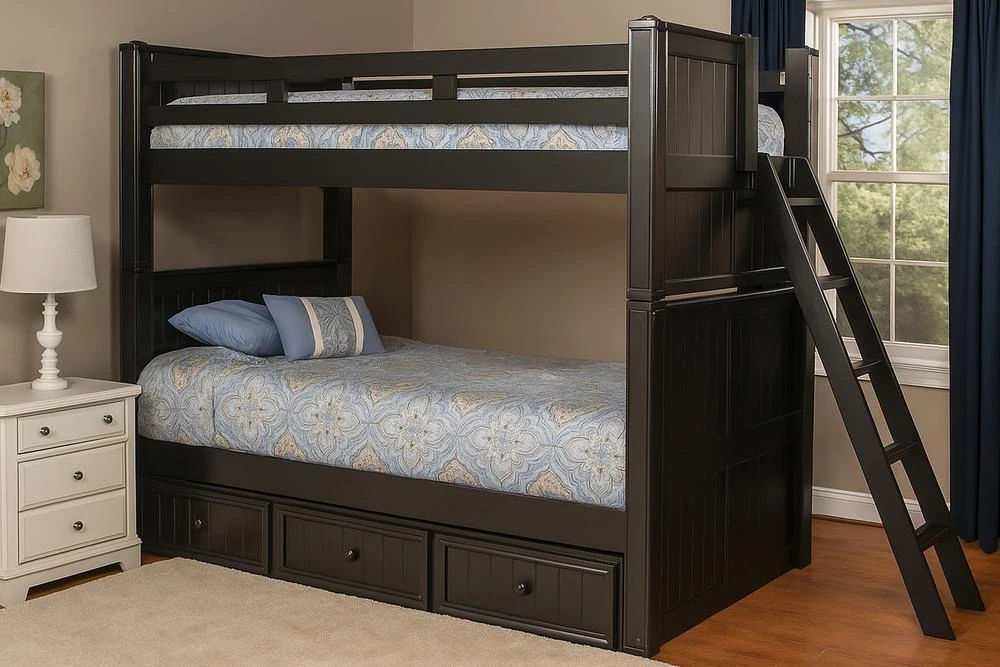
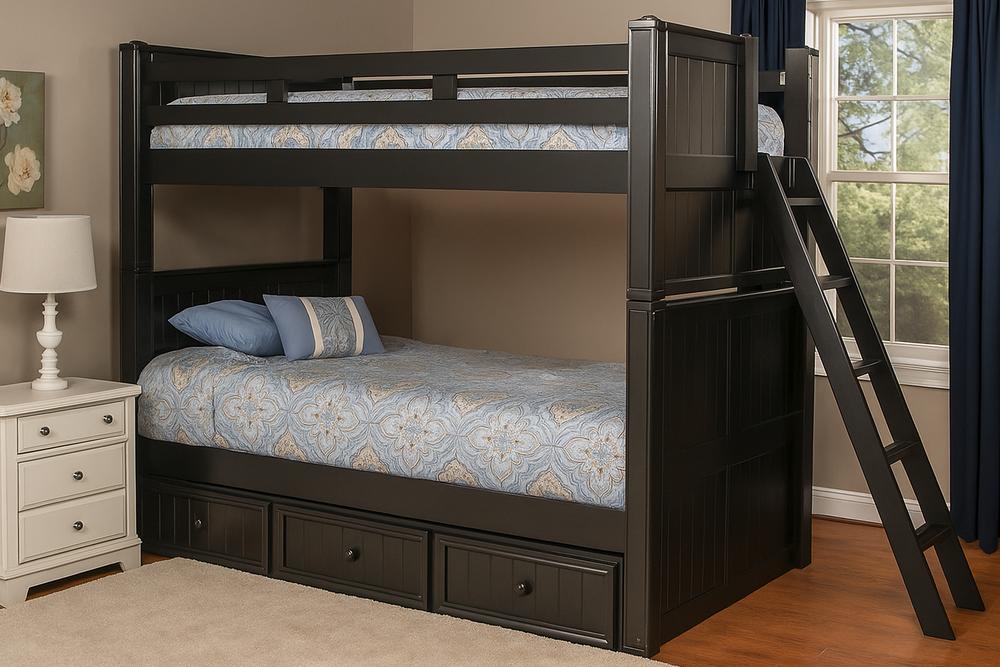
Storage matters as well. Since a low bunk sits closer to the floor, many families pair the frame with under-bed drawers or storage bins rather than a trundle. This creates convenient places for toys, shoes, or off-season clothing without requiring additional furniture.
It may seem like a small detail, but those storage options can make a noticeable difference in a bedroom where every square foot matters.
Comparing Low Bunk Beds to Other Styles
Not every family needs the same setup, and that's where comparing styles helps. A futon bunk bed combines a lower seating or sleeping area with an upper bunk, which works well for a room that doubles as a hangout space for friends.
A low bunk with stairs instead of a ladder gives older kids or grandparents visiting for a sleepover an easier, sturdier way up, plus the stairs themselves often include built-in drawers for extra storage.
Families who eventually want the same low-profile comfort for themselves sometimes look at adult bunk beds built with the identical space-saving logic, just sized for a grown-up frame.
Choosing between these options comes down to how the room gets used day to day. A busy household with frequent sleepovers might lean toward stairs for safety and storage. A room that needs to double as a lounge space might do better with a futon-style lower bunk.
Finding the Right Fit for Your Child's Room
Picking a low bunk bed involves more than considering its height. Mattress size, weight capacity, guardrail placement, and wood finish all influence how effectively the piece works within a particular room and for a particular child.
A solid wood frame designed for everyday use performs differently from a lightweight alternative. That distinction becomes increasingly apparent over the years as children climb, move around, and put the frame through the demands of daily use.
At Just Bunk Beds, we build our low bunk beds with the same attention to detail and craftsmanship that goes into every piece we sell. We know parents aren't just buying a place for kids to sleep.
They're making a decision that has to hold up physically and fit the room correctly for years. Our team walks each customer through sizing, safety features, and finish options so the choice feels clear rather than confusing.
We also know that no two kids' rooms are exactly alike, which is why we offer guidance on customization, from stair configurations to mattress sizing, so families end up with a bunk bed that actually works for their space.
If you have any questions about Just Bunk Beds, please don't hesitate to reach out to our team.
Frequently Asked Questions
Are low bunk beds safe for younger children?
Yes. Because the top mattress sits closer to the ground than a standard bunk, a low-profile design reduces the fall distance and makes it easier for a parent to assist a young child getting in or out of bed.
Can a low bunk bed still fit a trundle underneath?
It depends on the frame's clearance. Some low bunk designs are built specifically to accommodate a trundle, while others prioritize a lower top bunk instead, so it's worth checking the exact measurements before buying.
Do low bunk beds work in rooms with low ceilings?
They're actually one of the best options for that situation. The reduced overall height keeps the top bunk from feeling cramped against the ceiling, which is a common complaint with taller frames.