
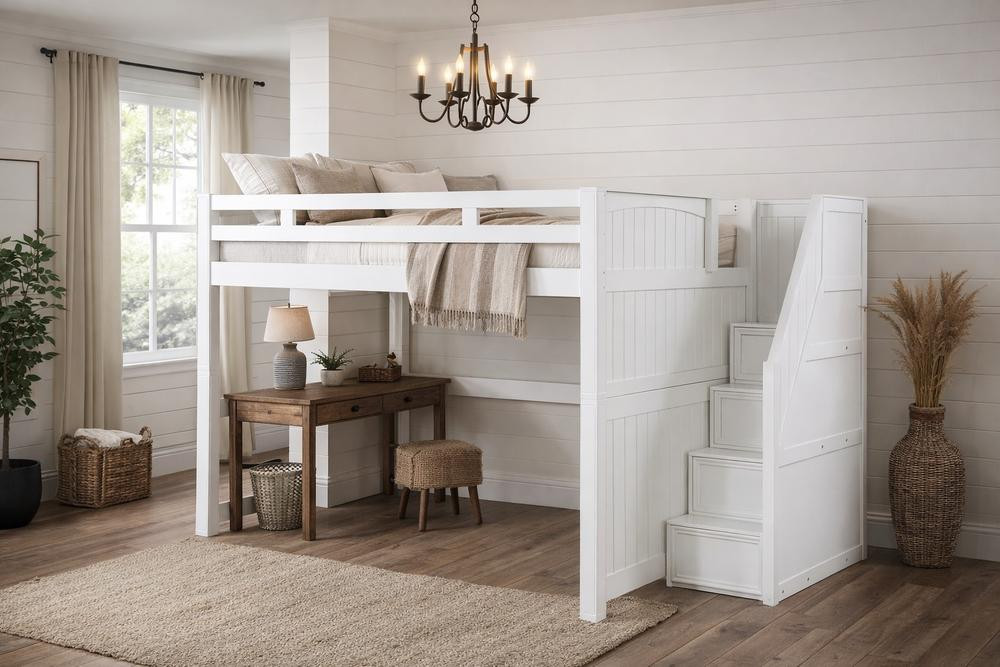
Bunk Beds with Stairs vs. Ladders: Which Is Right for Your Room?
Posted by Posted by Just Bunk Beds on Aug 10th 2026
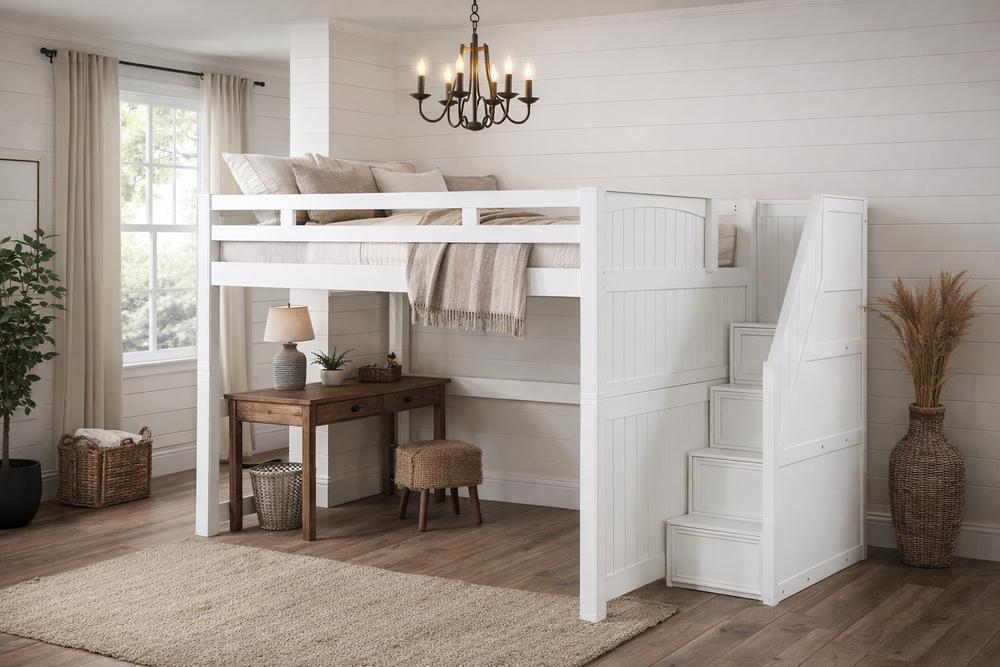
Quick Summary
Choosing between a staircase and a ladder for a bunk bed comes down to floor space, who is climbing, and whether extra storage matters to your household. A staircase is easier and steadier to climb, works well for younger children and adults, and often doubles as storage for clothes or bedding. A ladder takes up far less room and suits smaller bedrooms or beds paired with a trundle. The right pick depends on the size of the room, the age of the sleeper, and how much storage the family actually needs.
Choosing between bunk beds with stairs and a traditional ladder is one of the first questions we hear from customers shopping for a new bed. At Just Bunk Beds, we talk with families and adults every week who are trying to figure out which climbing style fits their room, their budget, and their daily routine. A ladder keeps the footprint small and the price lower, while a staircase gives climbers a steadier, more confident path to the top bunk and frequently includes built-in drawers for storage.
There is no single right answer, but there is a right answer for your specific room and the people who will be using the bed. In this guide, we break down floor space, safety, storage, ladder styles, and how kids and adults each factor into the decision so you can shop with confidence.
Floor Space: The First Thing to Consider
Floor space is usually the deciding factor before anything else gets discussed. A staircase requires more room along one side of the bed because the steps extend outward the same way a small set of stairs would in any home.
Depending on the model, that can mean anywhere from two to three feet of additional space compared to a ladder. If the bedroom is on the smaller side, or if the bed needs to sit close to a closet, window, or desk, a ladder is often the more practical option simply because it takes up almost no floor space beyond the bed frame itself.
On the other hand, if the room has a bit of extra width to spare, stairs make excellent use of that space rather than leaving it empty. Many shoppers find that a staircase actually earns its footprint back because the steps themselves become storage, which we cover in more detail below.
Safety and Accessibility: Who Is Climbing the Bed
Safety is where stairs tend to have a real advantage. Stairs are wider, have a flat surface to step on, and often include a handrail, which makes them easier and steadier to climb than rungs on a ladder. This matters most for younger children, older adults, or anyone climbing up to bed at night when the room is dark. A staircase reduces the chance of a missed step because the foot placement is more forgiving than a ladder rung.
Federal safety requirements also apply regardless of which climbing method a bunk bed uses. The Consumer Product Safety Commission requires guardrails on both sides of the top bunk, and the top of those guardrails must sit at least five inches above the mattress surface, with openings between the guardrail and bed frame kept narrow enough to prevent a child from becoming trapped.
Storage Stairs vs. Open Ladders
One of the biggest advantages of a staircase is what happens underneath it. Most storage stairs include built-in drawers at each step, giving you a place to keep folded clothes, extra linens, or toys without adding a separate dresser to the room. For families dealing with a small bedroom, this can be the difference between a cramped space and one that actually feels organized.
A ladder does not offer that same built-in storage, but it also does not take up the floor space that a staircase needs. If storage is not a priority, or if the room already has a dresser and closet with plenty of room, a ladder keeps things simple and often brings the overall price of the bed down as well.
Vertical Ladders vs. Slanted Ladders
If you do decide a ladder is the better fit, you still have a choice between a vertical ladder and a slanted, or angled, ladder. A vertical ladder is the more space-efficient option because it sits flush against the end of the bed and barely extends into the room. It is a strong choice for smaller bedrooms where every inch counts.
A slanted ladder angles outward from the bed frame, which generally makes it easier and more comfortable to climb, particularly for younger children or anyone who prefers a gentler incline. The trade-off is that it extends farther into the room than a vertical ladder, so it needs a bit more clearance to work well.
Trundle Compatibility
If a trundle bed is part of the plan, the choice between stairs and a ladder becomes even more important. A trundle needs floor space to roll out from underneath the bottom bunk, so pairing it with a full staircase can sometimes leave a room feeling tight once the trundle is pulled out for a sleepover. In these cases, a ladder, especially a vertical one, frees up the floor space needed for the trundle to extend fully.
If storage is still a priority but a trundle is also part of the plan, some twin over full bunk beds with stairs models are designed with this balance in mind, so it is worth checking the specific dimensions of any bed you are considering.
Kids vs. Adults: Does Age Change the Answer
Age plays a real role in this decision. For young children, stairs are generally the safer and more comfortable choice because they offer a wider, steadier surface and often a handrail to hold onto. Most safety experts also recommend that children under six should not use the top bunk at all, regardless of whether the bed has a ladder or stairs, so keep that in mind when shopping for a younger child's room.
For teenagers and adults, either option can work well, and the decision usually comes down to personal preference, floor space, and whether the extra storage from a staircase is worth the additional footprint.
Many adult bunk beds are built with a heavier weight capacity and sturdier stair or ladder construction to comfortably support grown adults using the bed night after night.
Getting the Measurements Right Before You Order
Once you have a general direction in mind, take precise measurements of the room and compare them against the exact dimensions listed on the product page for the bed you are considering. Pay attention not only to the footprint of the stairs or ladder but also to the total height of the bed frame, particularly if the room has sloped ceilings or a low overhead light fixture. A few extra minutes spent measuring before you order can prevent the frustration of a bed that technically fits but feels cramped once it is fully assembled.
Ready to find the safest, best-fitting bunk bed for your room? Browse our full collection of bunk beds with stairs and ladders at Just Bunk Beds and enjoy free nationwide shipping on every order. Our team is happy to help you compare sizes and configurations so you get a bed that fits your space and your family.
Frequently Asked Questions
Are bunk beds with stairs safer than bunk beds with ladders?
Stairs generally offer wider, steadier surfaces, making climbing easier and safer for younger children when used with proper adult supervision.
How much extra floor space do storage stairs need compared to a ladder?
Storage stairs typically need about two to three additional feet of floor space along one side compared with vertical ladders.
What age is appropriate for the top bunk?
Safety guidance generally recommends that children under six avoid top bunks, while older children should use compliant guardrails and supervision.