
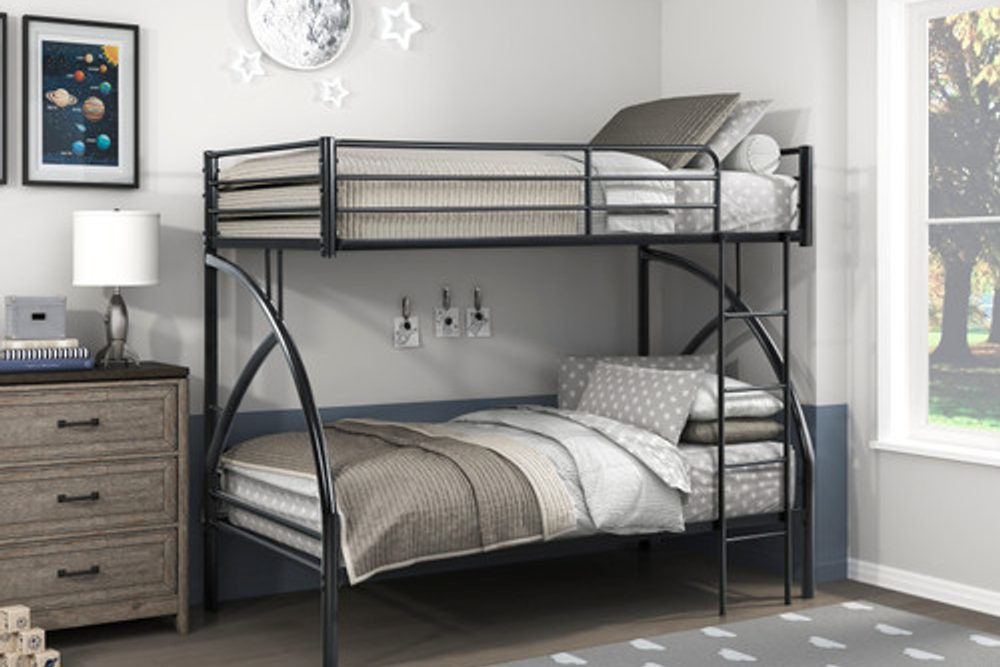
Bunk Bed Height Options: Choosing The Right Fit For Your Space
Posted by Posted by Just Bunk Beds on Jul 20th 2026
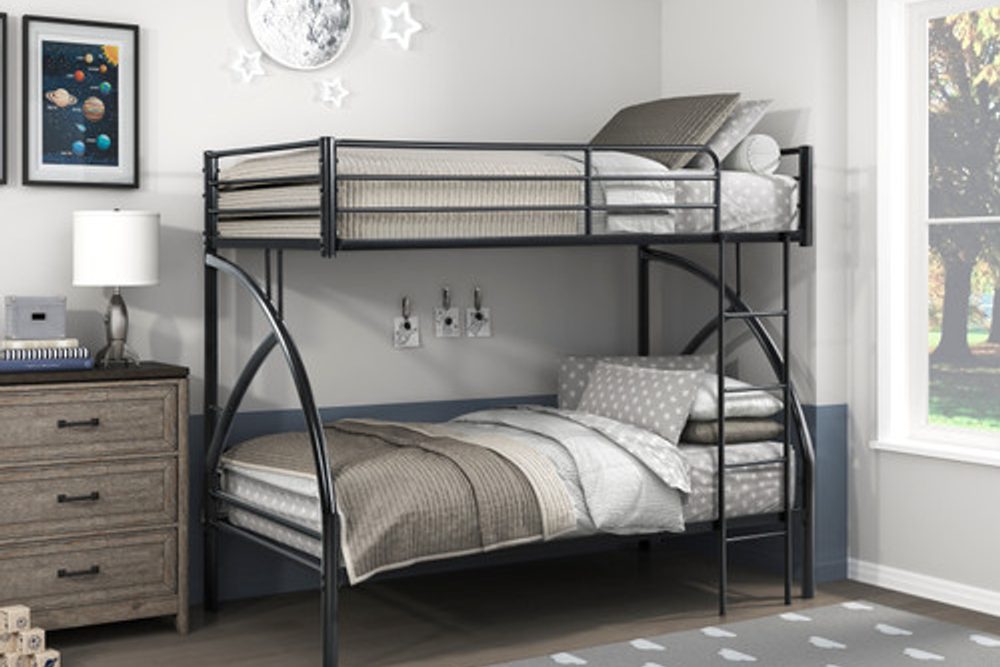
Quick Summary
Getting bunk bed height right comes down to three things: how much space is between the mattresses, how tall your ceiling is, and how tall the people sleeping in it are. Standard frames leave about 33 to 36 inches of clearance between the top of the lower mattress and the bottom of the upper bunk, though adult households usually feel more comfortable toward the higher end of that range. Mattress thickness, ladder style, and whether you go with a ladder or stairs all affect how the finished bed actually feels once it's set up. Measuring your room and your mattress together before you order is the easiest way to avoid a bunk bed that feels cramped.
If you're shopping for a bunk bed for adults, the height and clearance matter a lot more than they do for a kid's room. A setup that's perfectly comfortable for an eight-year-old can feel like a squeeze for a grown adult trying to sit up without bumping their head. Here's what actually goes into getting the height right.
Why Clearance Matters More for Adults
Kids don't need much room to sit up in bed, but adults do. If you're furnishing a guest room, a cabin, or a rental property where grown-ups will be sleeping on both levels, you want more breathing room between the two mattresses than a standard kids' bunk bed usually offers.
Most standard frames give you somewhere between 32 and 40 inches of clearance between the top of the lower mattress and the underside of the upper bunk. For adult sleepers, especially anyone over 5'10", it's worth looking at frames toward the higher end of that range. That's part of why bunk beds built specifically for adults tend to have taller vertical clearance and a sturdier frame overall, not just longer mattress platforms.
How Much Ceiling Height Do You Actually Need?
Your ceiling height sets the outer limit on what's possible. A standard 8-foot ceiling works fine for most bunk beds, but it does limit how tall the overall unit and top bunk clearance can be. If your room has a 9 or 10-foot ceiling, you've got a lot more flexibility, including room for taller frames or dual-height configurations that let you adjust the top bunk up or down depending on who's using it.
Before you shop, measure from the floor to the ceiling, then subtract a few inches for headroom on the top bunk. That's roughly the maximum overall bed height you're working with.
The Clearance Number Isn't the Whole Story
Here's something a lot of shoppers miss: the "clearance" listed on a product page usually measures the empty space in the frame, not the space you'll actually have once a real mattress is in there.
A thick memory foam mattress can eat into that number fast. Compare the two:
| Mattress type | Typical thickness | Effect on clearance |
|---|---|---|
| Innerspring, low-profile | 6 inches | Keeps clearance close to the listed number |
| Standard hybrid | 8 inches | Takes a noticeable bite out of clearance |
| Thick memory foam | 10+ inches | Can reduce clearance significantly, sometimes more than expected |
Always measure with your actual mattress in mind, not just the frame's spec sheet. A 36-inch clearance with a 6-inch mattress feels roomy. That same 36 inches with a 10-inch memory foam mattress feels a lot tighter.
Stairs or a Ladder? Here's How to Decide
This is one of the most common questions we get, and there's no single right answer, it depends on the room and who's using the bed.
Stairs are easier to climb, especially for adults climbing up half-asleep or carrying something. Many bunk beds with stairs also double as storage, with drawers built into each step, which is a nice bonus in a smaller room. The tradeoff is that stairs take up more floor space than a ladder does.
Ladders save floor space and work well in tighter rooms. A vertical ladder sits close to the bed frame and takes up the least room, while a slanted or angled ladder is generally easier and more comfortable to climb but sticks out further into the room. If your space is tight, a vertical ladder is the better fit. If comfort and ease of climbing matter more than square footage, go with the angled version.
For rooms shared by adults or used mainly by adult guests, we usually recommend stairs or an angled ladder. For kids' rooms or smaller spaces, a vertical ladder is often the more practical pick.
What About Ladder Rung Spacing?
Rung spacing affects how natural the climb feels, especially for adults with a longer stride than a child's. Rungs that are spaced too close together feel awkward to climb, while rungs spaced too far apart can feel unstable.
Look for even, generously spaced rungs with a textured or non-slip surface, which makes a real difference for anyone climbing up in the dark or in socks.
Choosing the Right Setup for Your Room
Before you order a bunk bed, walk through these questions:
- How tall is your ceiling? Under 8 feet limits your options; 9 to 10 feet opens up taller and dual-height configurations.
- Who's using the top bunk? Kids can work with standard clearance; adults are more comfortable with clearance on the higher end.
- What mattress will you actually use? Measure clearance with your mattress thickness factored in, not just the frame spec.
- Stairs or ladder? Stairs for comfort and storage, a vertical ladder to save floor space, an angled ladder as the middle ground.
- Any light fixtures or ceiling fans in the way? Worth checking before you commit to a taller configuration.
If the room is used by a mix of ages, like a family guest room that sees both kids and adult visitors, a moderate height with an angled ladder is usually the safest bet for everyone.
The Just Bunk Beds Difference
At Just Bunk Beds, we've built our business around one thing: helping people find a bunk bed that actually fits their room, not just one that looks good in a photo. That means stocking wood and metal frames in every size and configuration, from simple twin bunks to heavy-duty adult beds built to hold up night after night, all tested to meet ASTM safety standards before they ever leave the warehouse. Every order ships free anywhere in the continental U.S., and if you're stuck deciding between a couple of options, our customer service team is happy to talk it through with you.
Take a look through our full lineup of bunk beds and loft beds, or call us at 800-507-5440 and we'll help you figure out what actually works for your space.
FAQs
What is the average distance between bunk beds?
Most bunk beds offer 33 to 36 inches of clearance between the lower mattress and the upper bunk frame. Some adjustable or dual-height models allow more, which is useful if different guests will be using the bed over time.
How much ceiling height do I need for a bunk bed?
Plan on at least 8 feet of ceiling height for a standard bunk bed. If you want a taller frame or a dual-height configuration, 9 to 10 feet gives you more room to work with.
Are stairs better than a ladder for adults?
Stairs are generally easier and more comfortable to climb, and many include built-in storage. Ladders take up less floor space, so the right choice really depends on how much room you have to work with.
Does mattress thickness affect how roomy a bunk bed feels?
Yes, and it's easy to overlook. A thicker mattress reduces the actual clearance between the two bunks more than the listed frame specification suggests, so always factor your mattress into the measurement.