
How to Choose the Right Bunk Bed: The Complete Buying Guide
Last Updated: July 2023
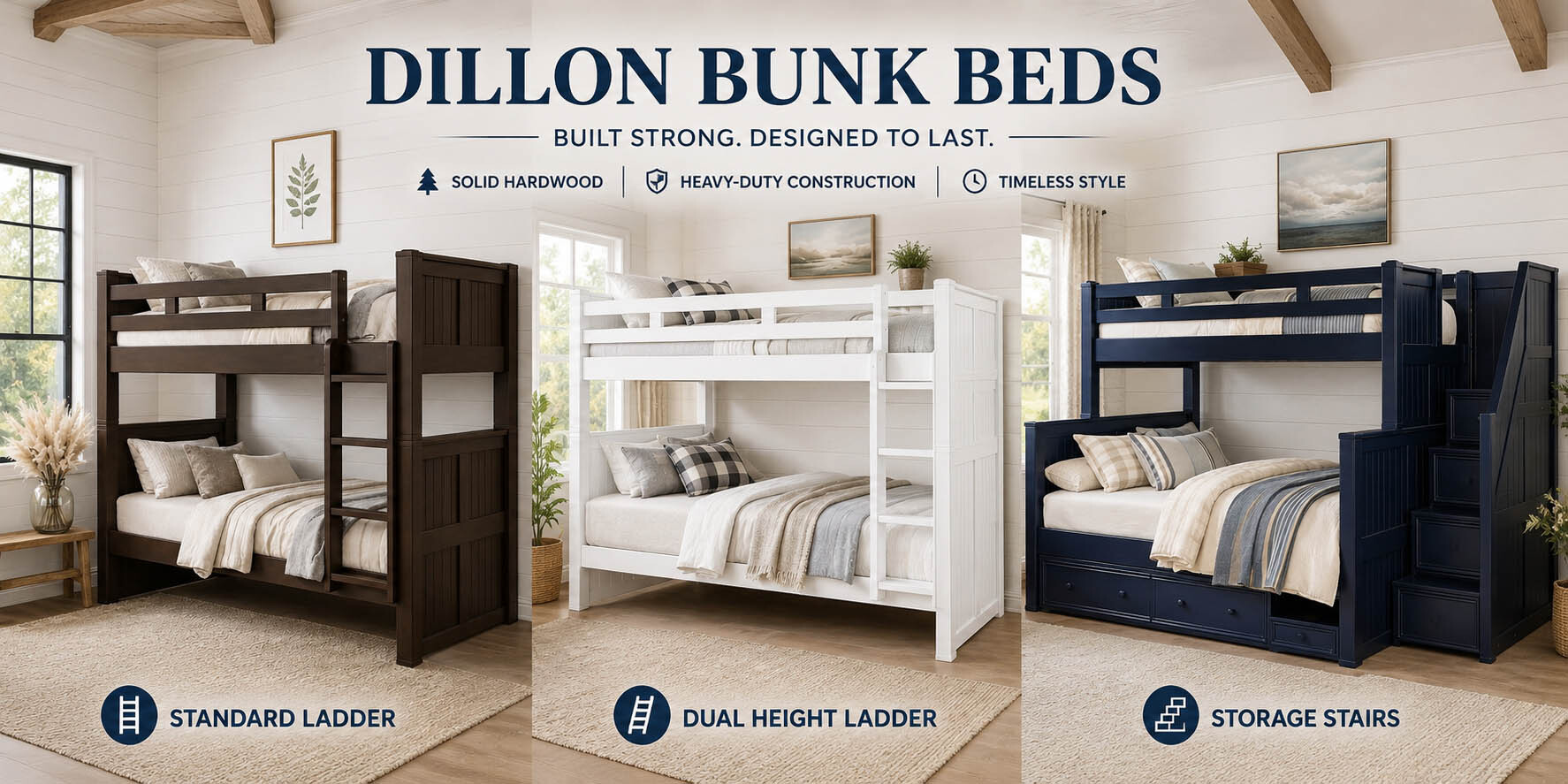
Buying a bunk bed is an investment in both space and functionality. Whether you're furnishing a child's bedroom, creating additional sleeping space for guests, or looking for a heavy-duty bunk bed for adults, choosing the right model can make a significant difference in comfort, safety, and long-term value.
Unlike most furniture purchases, a bunk bed involves more than simply selecting a style you like. Room size, ceiling height, mattress dimensions, ladder design, storage options, construction quality, and future flexibility all play an important role in finding the best fit for your home.
With so many options available, including Twin, Twin XL, Full, Full XL, and Queen bunk beds, along with ladders, storage stairs, trundles, and convertible designs, it can be difficult to know where to begin.
This comprehensive buying guide walks you through every major decision you'll need to make before purchasing a bunk bed. By the end, you'll have a clear understanding of which features matter most and which type of bunk bed best suits your family, your room, and your budget.
5 Questions to Ask Before Buying a Bunk Bed
Before comparing styles and finishes, ask yourself these five simple questions:
✔ Who will be sleeping in the bunk bed?
✔ What size mattress do they need today, and in the future?
✔ How much floor space and ceiling height do you have?
✔ Would a ladder or storage stairs work better for your room?
✔ Do you want a bunk bed that can convert into two separate beds later?
Answering these questions first will eliminate many unsuitable options and make choosing the right bunk bed much easier.
Who Will Be Sleeping in the Bunk Bed?
The first step in choosing the right bunk bed isn't selecting a color or deciding between stairs and a ladder, it's determining who will actually use the bed. Different age groups have different needs, and selecting the right bunk bed starts with understanding how it will be used over the coming years.
Children
For younger children, safety and accessibility are usually the highest priorities.
Many families choose a Twin over Twin bunk bed because it provides two comfortable sleeping areas while occupying roughly the same floor space as a single bed. Models with storage stairs are especially popular because each step provides a larger, more secure climbing surface than a traditional ladder while also adding valuable storage for toys, clothing, or bedding.
Look for features such as full-length guard rails, sturdy ladder attachments, and high-quality construction designed for everyday family use.
Teenagers
Teenagers often outgrow standard Twin mattresses long before they outgrow their bunk bed.
If your children are approaching their teenage years, consider upgrading to a Twin XL, Full, or Full XL bunk bed. These larger sleeping surfaces provide additional legroom and make the bunk bed much more comfortable for growing teenagers.
It's also worth considering whether your children may eventually want separate beds. A convertible bunk bed can easily adapt as their needs change, making it an excellent long-term investment.
Adults
Not all bunk beds are designed to support adult use.
If the bunk bed will be used by adults, focus on models built from solid hardwood or heavy-duty steel with reinforced support systems and higher recommended weight capacities.
Larger mattress sizes, such as Full, Full XL, and Queen, provide significantly greater sleeping comfort than standard Twin mattresses and are generally preferred for adult bedrooms, vacation homes, employee housing, lake cabins, and Airbnb rentals.
Durability becomes especially important when adults will be using the bunk bed every day, making construction quality just as important as appearance.
For demanding residential settings and regular adult use, explore our selection of heavy-duty bunk beds built with substantial framing and reinforced support systems.
Guest Rooms
A bunk bed can dramatically increase the sleeping capacity of a guest room without requiring additional floor space.
Families who regularly host grandchildren, relatives, or overnight visitors often choose Full over Full or Queen bunk beds because they comfortably accommodate both children and adults.
If your guest room serves multiple purposes, consider a convertible bunk bed that can be separated into two individual beds whenever your needs change.
Vacation Homes and Airbnb Rentals
Vacation properties place unique demands on furniture.
Guests of different ages, heights, and weights may use the same bunk bed throughout the year, making durability one of the most important considerations. Heavy-duty hardwood bunk beds with reinforced support systems, replaceable components, and timeless designs tend to offer the best long-term value for vacation rentals because they withstand frequent use while remaining attractive for many years.
Storage drawers, under-bed trundles, and built-in stairs can also help maximize sleeping capacity without overcrowding the room.
Think About Your Family's Future
Many people purchase a bunk bed for today's needs without considering how those needs may change over the next five or ten years.
- Children grow taller.
- Families move to larger homes.
- Guest rooms become home offices.
- Vacation rentals evolve.
The best bunk bed is one that continues meeting your needs long after the initial purchase.
Features such as convertible designs, larger mattress sizes, storage options, and durable hardwood construction often provide greater long-term value than choosing the least expensive option available.
A well-built bunk bed should remain useful for many years, adapting to your family's changing needs instead of being replaced after only a short period of use.
Choosing the Right Bunk Bed Size
One of the most important decisions you'll make is choosing the right mattress size. While many shoppers focus on the appearance of a bunk bed first, selecting the correct size has a much greater impact on comfort, functionality, and long-term satisfaction.
Think beyond today's needs. A bunk bed that fits a young child today may not provide enough sleeping space for a teenager a few years from now. Likewise, if adults or overnight guests will be using the bunk bed, selecting a larger mattress from the start can save you from replacing the bed later.
Fortunately, modern bunk beds are available in a wide range of sizes, allowing you to match the bed to your room, your family, and the people who will be sleeping in it.
Bunk Bed Size Comparison Guide
Mattress Size Best For Advantages
------------- --------------------------------------------------------------------------------------------
Twin Young children Compact, affordable, ideal for smaller bedrooms
Twin XL Growing children and teenagers Five inches longer than a Twin for additional legroom
Full Teenagers and adults Wider sleeping surface with excellent versatility
Full XL Taller teenagers and adults Extra length provides greater comfort for taller sleepers
Queen Adults, guest rooms, vacation homes Maximum sleeping comfort and long-term flexibility
Taller children, teenagers, and adults may benefit from the additional sleeping length explained in our guide to extra-long bunk beds.
Twin Bunk Beds
Twin bunk beds remain the most popular choice for children's bedrooms because they maximize sleeping capacity while using very little floor space.
They're an excellent option for siblings sharing a room or for families looking to free up additional play space. Twin mattresses are also widely available and generally cost less than larger mattress sizes.
While Twin bunk beds work exceptionally well for younger children, it's worth considering how quickly children grow. If you expect the bunk bed to remain in use throughout the teenage years, a larger mattress may provide better long-term value.
Best for:
- Young children
- Shared bedrooms
- Smaller rooms
- Budget-conscious families
Twin XL Bunk Beds
A Twin XL mattress is the same width as a standard Twin but adds five additional inches of length.
That extra length may not sound significant, but it makes a noticeable difference for taller children, teenagers, college students, and adults.
Twin XL bunk beds have become increasingly popular because they offer the space-saving benefits of a Twin while providing additional comfort for growing sleepers.
They're often an excellent compromise for families who want to maximize bedroom space without moving to a wider Full-size bunk bed.
Full Bunk Beds
Full-size bunk beds provide considerably more sleeping space than Twin models while remaining practical for many bedrooms.
The additional width makes them a comfortable option for teenagers, adults, and guest rooms, particularly if the bunk bed will be used frequently.
Many families choose Full over Full bunk beds because they provide the flexibility to accommodate children today while remaining comfortable for adults in the future.
If you have adequate floor space, a Full bunk bed is often one of the most versatile options available.
Full XL Bunk Beds
Full XL bunk beds combine the additional width of a Full mattress with five extra inches of length.
They're particularly well suited for taller adults, college students, and vacation properties where guests of varying heights may use the bunk bed throughout the year.
Although Full XL mattresses are less common than standard Full mattresses, many customers find the added comfort well worth the investment.
Queen Bunk Beds
Queen bunk beds provide the largest standard sleeping surface available in a bunk bed configuration.
They're ideal for adults, vacation homes, lake cabins, Airbnb properties, and families who simply want the most spacious sleeping arrangement possible.
Although Queen bunk beds require more floor space than smaller sizes, they often eliminate the need for multiple guest beds while providing exceptional comfort.
For homeowners planning to keep their bunk bed for many years, a Queen bunk bed is often the most future-proof investment.
Measure Your Room Before You Buy
One of the most common mistakes buyers make is measuring only the location where the bunk bed will sit.
While the footprint of the bed is certainly important, it's equally important to consider how people will move around the room once the bunk bed is assembled.
Before placing your order, measure:
- The overall length and width of the room.
- Doorways, hallways, and staircases leading to the bedroom.
- The location of windows, electrical outlets, and heating vents.
- Clearance for drawers, trundles, or storage stairs.
- Walking space around the bunk bed.
If you're selecting a model with storage stairs, remember that the stairs increase the overall footprint of the bunk bed. Always use the complete assembled dimensions listed on the product page rather than the mattress size alone.
Taking a few extra minutes to measure carefully can prevent costly surprises during installation.
Consider Your Ceiling Height
Floor space isn't the only measurement that matters. Ceiling height plays a major role in how comfortable a bunk bed will be once it's assembled.
The person sleeping on the upper bunk should have enough headroom to sit up comfortably without feeling confined or repeatedly bumping their head against the ceiling.
For homes with standard 8-foot ceilings, most standard-height bunk beds fit comfortably. Taller ceilings provide even greater flexibility, while rooms with lower ceilings may require extra attention when selecting both the bunk bed and the mattress height.
Ceiling fans, hanging light fixtures, and sloped ceilings should also be considered before installation.
Before making your final selection, review our complete Bunk Bed Safety Guide for important information about guardrails, mattress height, ladders, ceiling clearance, and everyday use.
Leave Comfortable Headroom
A common misconception is that if the bunk bed physically fits beneath the ceiling, it will automatically be comfortable to use.
In reality, comfortable headroom is just as important as the overall height of the bed.
The person sleeping on the top bunk should be able to turn over, sit up naturally, and get in and out of bed without constantly worrying about the ceiling above them.
Choosing the correct mattress thickness also plays an important role in maintaining adequate headroom while ensuring the guard rails continue to provide proper protection.
Don't Forget Ceiling Fans and Light Fixtures
Ceiling fans and hanging light fixtures deserve special attention whenever installing a bunk bed.
The upper bunk should always be positioned far enough away to eliminate any possibility of contact with moving fan blades or light fixtures.
If necessary, consider relocating the bunk bed, replacing the light fixture with a flush-mounted design, or choosing a lower-profile bunk bed better suited to the room.
Safety should always take priority over room layout.
Take Advantage of Product Dimensions
Every bunk bed model is different.
Rather than estimating whether a bunk bed will fit your room, carefully review the overall dimensions listed on each product page.
These measurements account for features such as ladders, storage stairs, guard rails, and decorative trim that extend beyond the mattress itself.
Comparing the product dimensions with your room measurements before ordering is one of the simplest ways to ensure a smooth delivery and installation.
Ladder or Stairs: Which Is Right for You?
One of the biggest decisions you'll make when selecting a bunk bed is how you'll access the upper bunk.
Neither option is universally better. The right choice depends on who will be using the bunk bed, how much floor space you have available, and whether additional storage is important to you.
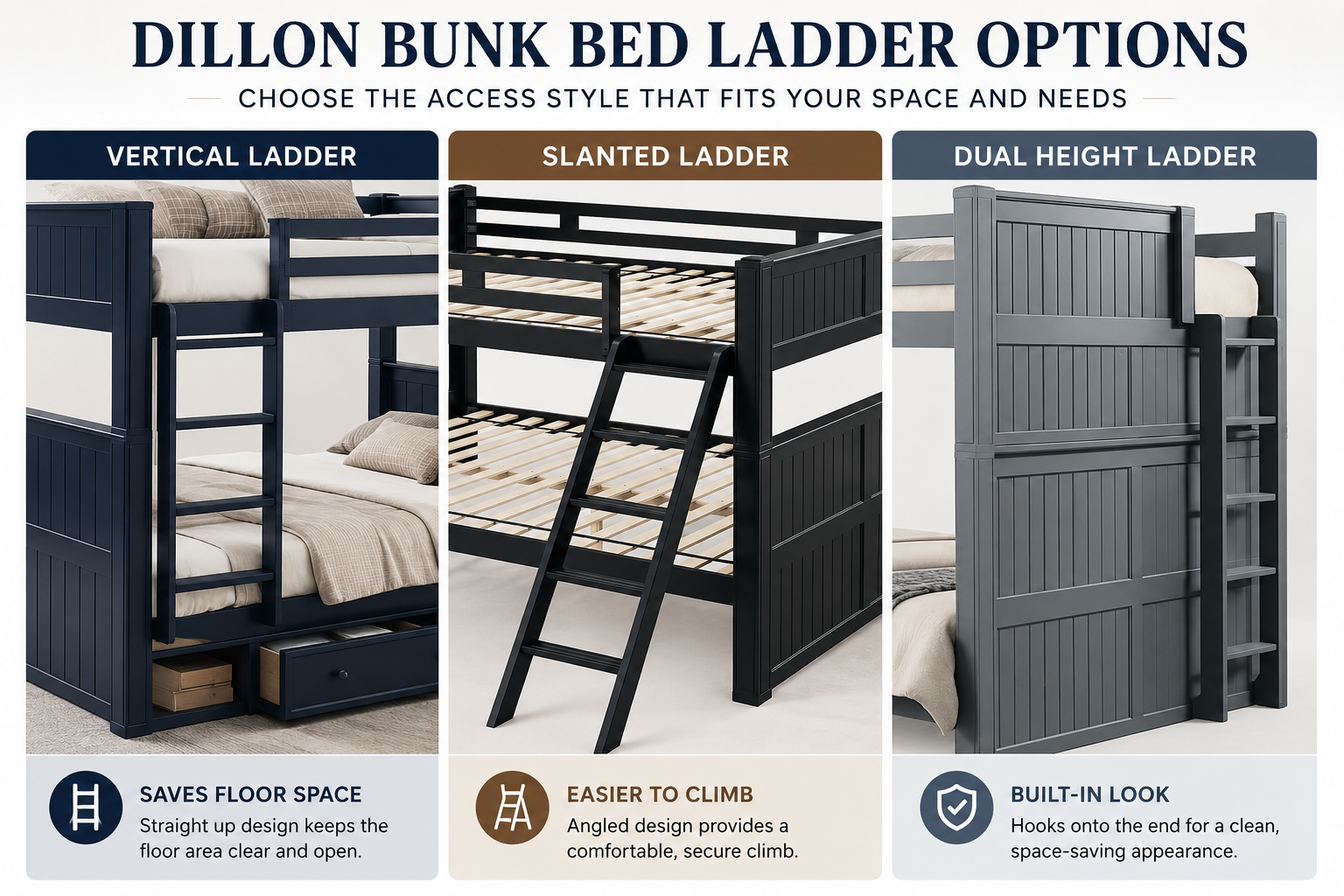
Today's bunk beds typically offer three different access options:
Vertical ladders
Slanted ladders
Storage stairs
Each offers its own advantages, and understanding the differences will help you choose the option that best fits your home.
Vertical Ladders
Vertical ladders attach directly to the bunk bed and require very little additional floor space.
Because they don't extend outward into the room, they're an excellent choice for smaller bedrooms where every inch matters.
Many adults also appreciate vertical ladders because they maintain a clean, streamlined appearance while maximizing open floor space.
On many heavy-duty hardwood bunk beds, the ladder hooks securely onto steel brackets, making installation straightforward while providing a sturdy climbing surface.
Vertical ladders are also an excellent choice when using an under-bed trundle, since they typically don't interfere with pulling the trundle in and out.
Vertical ladders are ideal if you:
- Have a smaller bedroom.
- Plan to use a trundle.
- Want to maximize walking space.
- Prefer a clean, traditional appearance.
Our guide to vertical bunk bed ladders explains how they save floor space, where they can be positioned, and when they work best with trundles and under-bed storage.
Slanted Ladders
Slanted ladders angle outward from the bunk bed, creating a more gradual climbing angle.
Many families with younger children find them easier to climb because the angle feels more natural than a straight vertical ladder.
The trade-off is floor space.
Since the ladder projects outward from the bunk bed, it requires additional clearance and may interfere with furniture placement or under-bed trundles.
If your bedroom has plenty of open space, a slanted ladder can provide an excellent combination of comfort and accessibility.
Storage Stairs
Storage stairs combine safe access to the upper bunk with built-in storage.
Each step doubles as a drawer or storage compartment, providing space for clothing, bedding, toys, books, or seasonal items.
Families often choose storage stairs because they eliminate the need for an additional dresser while making the upper bunk easier to access.
Although storage stairs require more floor space than a ladder, many homeowners find the extra storage well worth the additional footprint.
For children, storage stairs also provide larger, flatter stepping surfaces that many parents find easier to navigate than traditional ladder rungs.
Shoppers who prefer wider steps, handrails, and built-in drawer storage can compare our available bunk beds with stairs.
Ladder vs. Stairs Comparison
Feature Vertical Ladder Slanted Ladder Storage Stairs
Floor Space Required Excellent Good Fair
Ease of Climbing Good Very Good Excellent
Built-in Storage No No Yes
Compatible w/ Trundles Excellent Sometimes Yes
Best For Smaller rooms Young families Long-term everyday use
Which Option Do We Recommend?
Over the years, we've found that every access option has its place.
For compact bedrooms, a vertical ladder usually makes the most sense because it preserves valuable floor space.
If climbing comfort is your highest priority and room size isn't a concern, a slanted ladder offers a more gradual climbing angle.
For many families, however, storage stairs provide the best overall combination of accessibility, organization, and functionality. The added storage alone often eliminates the need for additional bedroom furniture, making them a popular choice for children's bedrooms and shared spaces.
Ultimately, the best choice depends on your room layout, storage needs, and who will be using the bunk bed every day.
Do You Need Additional Storage?
One of the biggest advantages of modern bunk beds is that they can do much more than simply provide two sleeping surfaces.
Many models incorporate practical storage solutions that help reduce clutter while making better use of the available space.
If you're furnishing a smaller bedroom, every drawer and storage compartment becomes valuable.
Storage Stairs
Storage stairs remain one of the most popular upgrades because they combine two essential functions into one piece of furniture.
Instead of occupying valuable floor space with a separate dresser, the drawers built into the staircase provide convenient storage for clothing, blankets, toys, books, and other everyday items.
For growing families, this extra storage often becomes just as valuable as the additional sleeping space.
Under-Bed Storage Drawers
Many bunk beds can also be equipped with under-bed storage drawers.
These large drawers slide smoothly beneath the lower bunk and provide an excellent place to store seasonal clothing, extra bedding, pillows, or sports equipment.
Because they utilize otherwise unused space beneath the bed, they help keep bedrooms organized without increasing the overall footprint of the bunk bed.
Under-Bed Trundles
If overnight guests are common, an under-bed trundle may be a better solution than storage drawers.
A trundle provides an additional sleeping surface that remains neatly tucked beneath the lower bunk until needed.
This is an excellent option for larger families, sleepovers, vacation homes, and guest rooms where occasional extra sleeping space is more valuable than additional storage.
When selecting a trundle, remember that not every ladder configuration provides the same level of access. Certain ladder styles may extend into the area where the trundle slides out, so it's important to choose a design that works well with both features.
Think Beyond Today's Needs
It's easy to focus on your family's current storage requirements, but children accumulate belongings surprisingly quickly.
Choosing a bunk bed with integrated storage today may help eliminate the need for additional furniture tomorrow.
Many families who initially believe they don't need storage later discover they appreciate having drawers for bedding, toys, clothing, school supplies, and seasonal items.
Planning ahead often provides better long-term value than purchasing separate storage furniture later.
Should You Choose a Convertible Bunk Bed?
One of the smartest investments you can make is selecting a bunk bed that grows with your family.
Convertible bunk beds can be separated into two individual beds whenever your needs change, allowing one piece of furniture to adapt through different stages of life.
This flexibility makes them especially popular with growing families. Children who happily share a room today may eventually want separate sleeping arrangements, and a convertible bunk bed makes that transition simple without requiring the purchase of entirely new furniture.
Convertible designs also work exceptionally well in guest rooms and vacation homes, where sleeping arrangements often change depending on who is visiting.
Instead of replacing furniture as your needs evolve, a convertible bunk bed gives you the freedom to reconfigure the room while continuing to use the same high-quality investment.
When evaluating bunk beds, it's worth asking yourself not only how you'll use the bed this year, but how you'll want to use it five or even ten years from now.
For families whose sleeping needs may change over time, learn more about why a convertible bunk bed can be a practical long-term choice.
Choosing the Right Bunk Bed Material
The material used to build a bunk bed has a direct impact on its strength, durability, appearance, and long-term value. While many bunk beds may look similar in photographs, the construction underneath often determines how well they perform after years of everyday use.
The three most common materials are solid hardwood, metal, and engineered wood. Each has its own advantages depending on your budget, intended use, and personal style.
Solid Hardwood Bunk Beds
Solid hardwood is widely regarded as the premium choice for bunk bed construction.
Its natural strength and durability make it an excellent option for children's bedrooms, adults, vacation homes, and rental properties where the bunk bed may be used every day.
High-quality hardwood bunk beds are designed to withstand years of use while maintaining their structural integrity. They can also be refinished or repainted if your decorating style changes over time.
Although hardwood bunk beds typically cost more than other materials, many families view them as a long-term investment rather than a temporary piece of furniture.
Metal Bunk Beds
Metal bunk beds are often chosen for their clean, modern appearance and affordability.
They can be an excellent option for guest rooms, occasional use, or smaller budgets. Many models are also lighter and easier to move than comparable hardwood designs.
Construction quality, however, varies considerably between manufacturers. When comparing metal bunk beds, pay close attention to the frame design, support system, and recommended weight capacity.
Engineered Wood Bunk Beds
Engineered wood bunk beds are generally the most economical option.
They are available in a wide variety of finishes and styles, making them attractive for children's bedrooms and occasional use.
As with any furniture purchase, quality varies significantly. Understanding the manufacturer's construction methods and recommended weight limits can help ensure you choose a model that meets your family's needs.
Material Comparison
Feature Solid Hardwood Metal Engineered Wood
Durability Excellent Very Good Good
Long-Term Value Excellent Good Fair
Weight Capacity Excellent Good to Excellent Varies
Timeless Appearance Excellent Good Good
Best For Adults, vacation homes Guest rooms Budget-conscious buyers
Bunk Bed Safety Should Always Come First
No matter which size or style you choose, safety should always be your highest priority.
Modern bunk beds include a variety of safety features designed to help reduce the risk of accidents, but those features are only effective when the bunk bed is assembled correctly and used as intended.
Before purchasing a bunk bed, make sure it includes full-length guard rails, a secure ladder or staircase, a sturdy support system, and clear mattress height recommendations.
Just as important, always follow the manufacturer's assembly instructions carefully and periodically check that all bolts and hardware remain tight.
A properly assembled bunk bed provides years of safe, dependable use.
Safety Checklist
Before using your bunk bed, confirm that:
✓ All hardware has been fully tightened.
✓ Guard rails are securely installed.
✓ The recommended mattress thickness has not been exceeded.
✓ The ladder or stairs are firmly attached.
✓ The bunk bed sits level on the floor.
✓ Children understand how to safely climb the ladder or stairs.
✓ The upper bunk is used only by children who meet the manufacturer's recommended age guidelines.
Common Mistakes to Avoid
Even experienced shoppers occasionally overlook important details when purchasing a bunk bed.
Avoiding these common mistakes can save time, money, and frustration later.
Choosing the Wrong Mattress
Size Always verify the correct mattress size before ordering. A mattress that is too large or too small can affect both comfort and safety.
Ignoring Ceiling Height
A bunk bed may physically fit inside the room while still leaving very little headroom for the person sleeping on the upper bunk. Always consider ceiling height before making your purchase.
Forgetting About Future Needs
Children grow quickly. A bunk bed that seems perfect today may feel too small only a few years later. Thinking ahead often leads to a better long-term investment.
Not Measuring the Complete Footprint
Many buyers measure only the mattress dimensions. Remember that ladders, stairs, guard rails, and decorative trim all contribute to the overall size of the assembled bunk bed.
Buying Based on Price Alone
While budget is always important, construction quality, durability, safety, and long-term flexibility usually provide far greater value over the life of the furniture.
Quick Decision Guide
Still deciding?
The following recommendations can help narrow your choices.
If You Need... We Recommend...
A bunk bed for young children Twin over Twin with storage stairs
A bunk bed for teenagers Twin XL or Full bunk bed
A bunk bed for adults Full over Full or Queen bunk bed
Maximum sleeping comfort Queen bunk bed
Built-in organization Storage stairs and under-bed drawers
Extra sleeping space Add an under-bed trundle
Long-term flexibility Convertible bunk bed
To compare ladder placement, available sizes, storage options, and design differences, see our complete Dillon vs. Gary vs. Austin bunk bed comparison.
Frequently Asked Questions
What size bunk bed is best for adults?
Most adults are more comfortable on a Full, Full XL, or Queen bunk bed, particularly if the bed will be used regularly.
Are bunk beds safe?
Yes. When properly assembled and used according to the manufacturer's recommendations, modern bunk beds are designed with safety features such as full-length guard rails, secure ladders, and reinforced support systems.
Are storage stairs worth it?
For many families, absolutely. Storage stairs provide easier access to the upper bunk while adding valuable storage without requiring additional furniture.
Can bunk beds be separated into two beds?
Many models can. If long-term flexibility is important, look for a convertible bunk bed designed to separate into two individual beds.
How much ceiling height do I need?
While requirements vary by model, the person sleeping on the upper bunk should have enough headroom to sit up comfortably without contacting the ceiling. Always compare the bunk bed's overall height with your room dimensions before ordering.
Once you've chosen the right bunk bed, proper care will help keep it safe, sturdy, and looking like new for years. Read our Bunk Bed Maintenance Guide for simple cleaning, inspection, and maintenance tips every owner should know.
Final Thoughts
Choosing the right bunk bed is about much more than selecting a style you like. It's about finding a bed that fits your room, supports the people who will use it, and continues to meet your family's needs for years to come.
By considering mattress size, room dimensions, ceiling height, ladder style, storage options, construction quality, and future flexibility, you'll be able to choose a bunk bed with confidence.
At JustBunkBeds, we've specialized exclusively in bunk beds and loft beds for many years. Whether you're shopping for children, teenagers, adults, vacation homes, or guest rooms, our goal is to help you find a bunk bed that combines safety, durability, and lasting value.
A well-chosen bunk bed isn't just a place to sleep, it's a smart investment in your home and your family's comfort.